
NAYPYITAW, April 1
Myanmar's Acting President, Senior General Min Aung Hlaing, has emphasized the need to implement a vehicle exchange system that allows the import of electric vehicles (EVs) to replace older, fuel-powered vehicles. The initiative aims to significantly reduce the nation's domestic fuel demands and curb foreign currency expenditure.
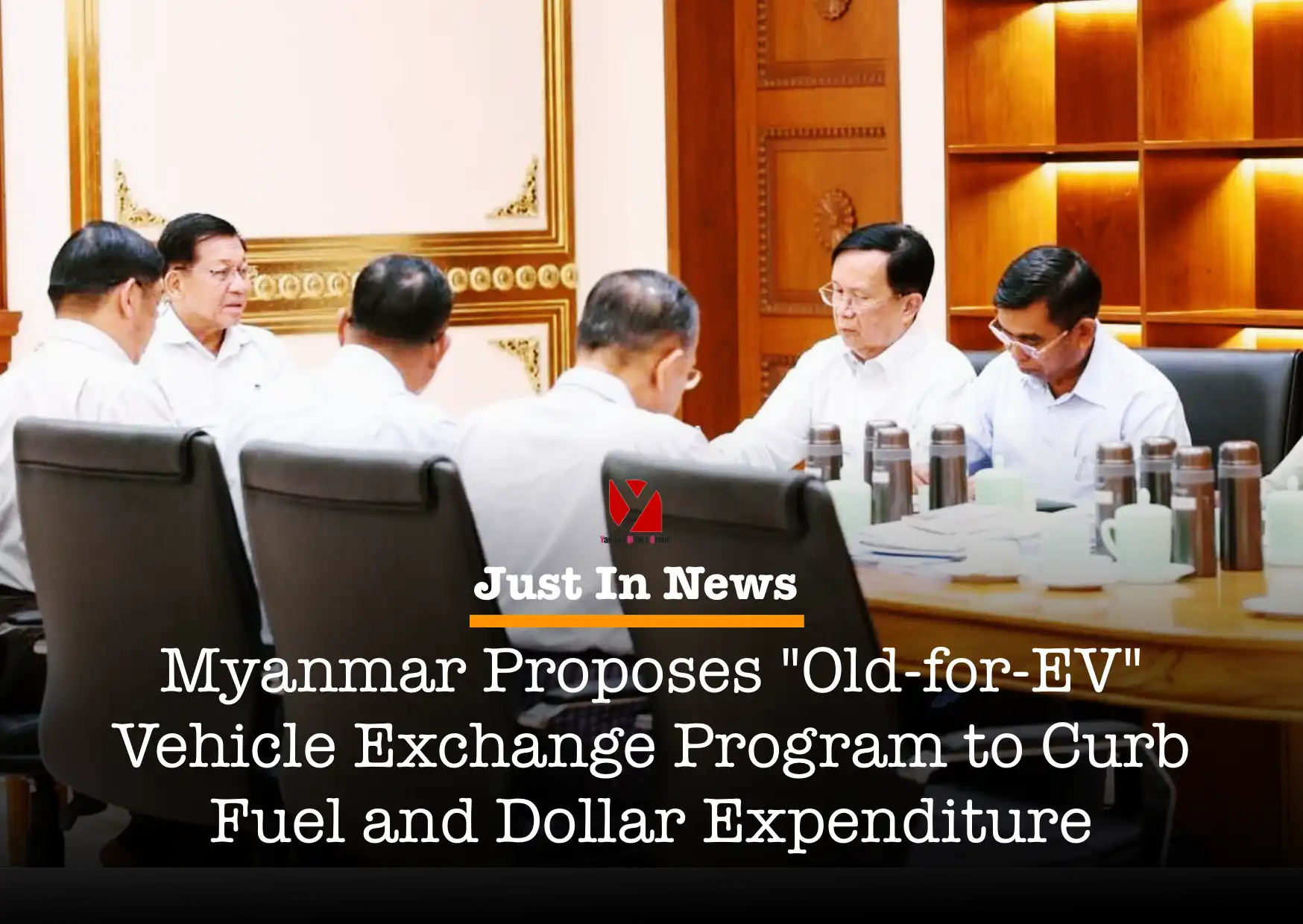
The Senior General announced the proposed policy during a coordination meeting focused on ensuring adequate supplies of fuel and agricultural fertilizers. The meeting was held on the afternoon of April 1 at the office of the Chairman of the National Defence and Security Council in Naypyidaw.
Policy Driven by Global Instability
The consideration of this new policy emerges as Myanmar grapples with domestic fuel shortages and surging prices, largely driven by global oil market instability and ongoing conflicts in the Middle East.
Senior General Min Aung Hlaing, who also serves as the Chairman of the State Security and Peace Commission, explained to attendees that facilitating EV imports in exchange for decommissioning old vehicles serves a dual macroeconomic purpose. It is projected to lower the country's reliance on imported fuel while simultaneously controlling the outflow of US dollars required to purchase foreign goods.
High-Level Coordination
The meeting underscored the urgency of the economic measures, bringing together top-tier government and financial figures. Attendees included Prime Minister U Nyo Saw, senior military officials, key cabinet ministers overseeing finance and home affairs, and the Governor of the Central Bank of Myanmar.
Ongoing Crisis Management Measures
To mitigate the immediate impacts of the ongoing fuel crisis, the government has already rolled out several conservation measures. Currently, authorities are enforcing an odd/even license plate rationing system for vehicle refueling. Additionally, government employees are mandated to carry out their office duties from home every Wednesday. The state is also actively encouraging citizens to rely primarily on public transportation networks, particularly the railway system, to further reduce individual fuel consumption.
ymg/knl