
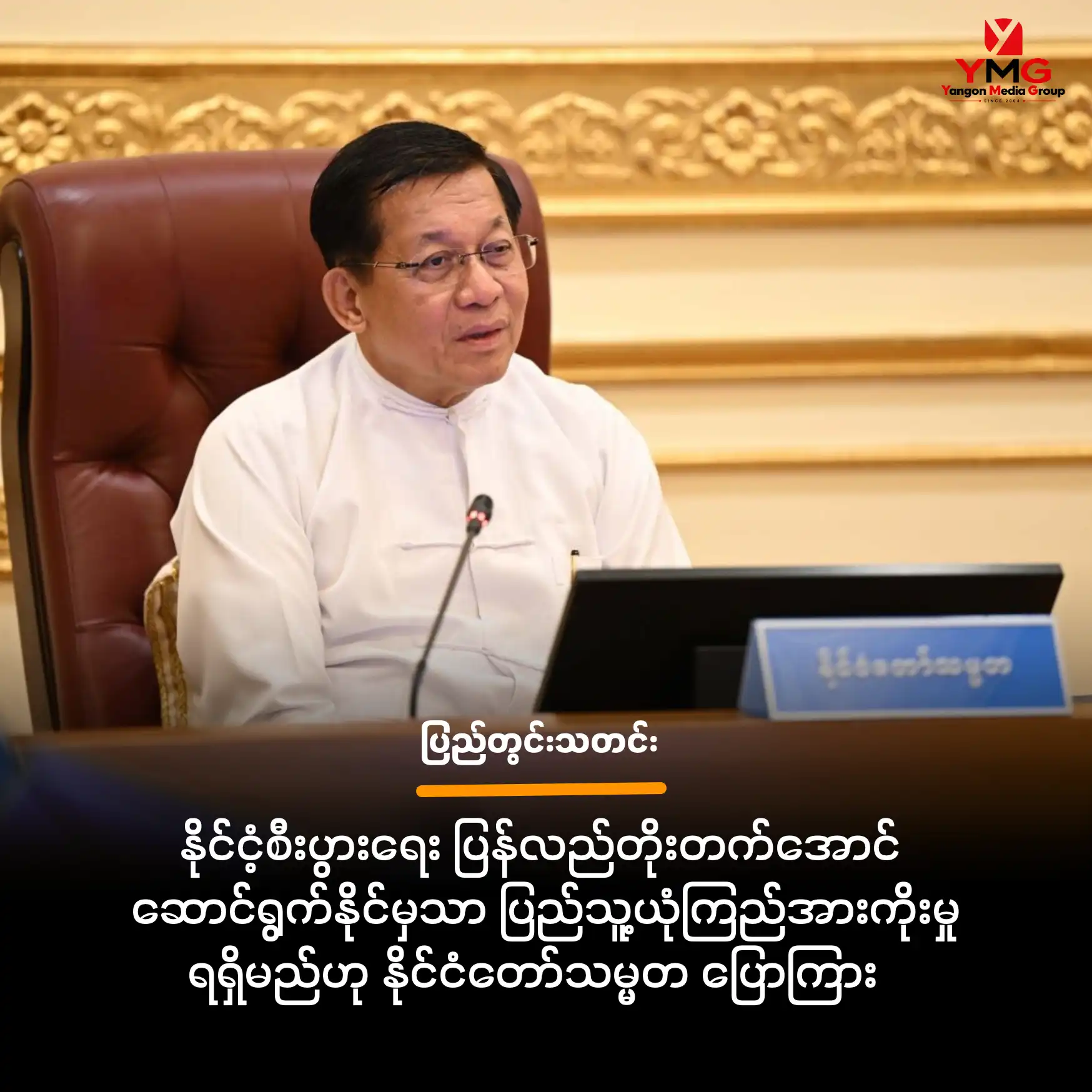
နေပြည်တော်၊ အောက်တိုဘာ ၅
အစိုးရတစ်ရပ်အနေဖြင့် နိုင်ငံ့စီးပွားရေး ပြန်လည်တိုးတက်လာအောင် ဆောင်ရွက်နိုင်မှသာ ပြည်သူ လူထု၏ ယုံကြည်အားကိုးမှုရရှိပြီး နိုင်ငံသည် အဘက်ဘက်မှ ဖွံ့ဖြိုးတိုးတက်လာမည်ဖြစ်ကြောင်း နိုင်ငံတော်သမ္မတ ဦးမင်းအောင်လှိုင်က အောက်တိုဘာ ၅ ရက် မွန်းလွဲပိုင်း နေပြည်တော်ရှိ နိုင်ငံတော် သမ္မတရုံးတော်၌ ပြည်ထောင်စုဝန်ကြီးများ၊ နေပြည်တော်ကောင်စီဥက္ကဋ္ဌ၊ တိုင်းဒေသကြီးနှင့် ပြည်နယ် ဝန်ကြီးချုပ်များအား နိုင်ငံ့စီးပွားဖွံ့ဖြိုးတိုးတက်ရေးဆိုင်ရာ လမ်းညွှန်မှာကြားစဉ် ပြောကြားသည်။
အချက်အလက်များအရ နိုင်ငံ၏ ဂျီဒီပီ ၃ ရာခိုင်နှုန်းခန့် တိုးတက်လာသော်လည်း ဒေသတွင်းနိုင်ငံများနှင့် နှိုင်းယှဉ်ပါက တိုးတက်မှုနှုန်း နှေးကွေးနေဆဲဖြစ်ကြောင်း၊ ပြည်တွင်းတည်ငြိမ်အေးချမ်းမှုမရှိခြင်းကြောင့် ကုန်ထုတ်လုပ်ငန်းများ ဖွံ့ဖြိုးမှုအားနည်းကာ နိုင်ငံ့စီးပွားရေးတိုးတက်မှု နှေးကွေးနေရသကဲ့သို့ ကုန်ထုတ် လုပ်ငန်းများ စွမ်းအားပြည့် လုပ်ကိုင်ခြင်းမရှိမှုကလည်း စီးပွားရေးအားနည်းမှုကို ဖြစ်ပေါ်စေကြောင်း ၎င်းက ပြောကြားသည်။
အစိုးရတာဝန်ထမ်းဆောင်မှု မကြာမီ ခြောက်လပြည့်မြောက်တော့မည်ဖြစ်ပြီး နိုင်ငံ့စီးပွားရေး ဖွံ့ဖြိုး တိုးတက်အောင် မလွဲမသွေဆောင်ရွက်နိုင်ရမည်ဖြစ်ကြောင်း သမ္မတက ဆိုသည်။ နိုင်ငံရေးမတည်ငြိမ်မှု၊ စီးပွားရေးပိတ်ဆို့မှု၊ ဘဏ္ဍာရေးအကူအညီနှင့် နိုင်ငံတကာဈေးကွက် အပြည့်အဝမရရှိမှု၊ ကုန်သွယ်မှု ကျဆင်းမှုတို့ကြောင့် ကုန်ထုတ်လုပ်ငန်းများ စွမ်းအားပြည့်လည်ပတ်ရန် အခက်အခဲရှိနေကြောင်း၊ ပျက်စီးသွားသည့် လမ်း၊ တံတားနှင့် အခြေခံအဆောက်အအုံများကို ပြန်လည်တည်ဆောက်ရာတွင် ဘဏ္ဍာငွေ၊ လူ့စွမ်းအားနှင့် အချိန်များ ထပ်မံအသုံးပြုနေရသဖြင့် မူလရည်မှန်းထားသည့် ဖွံ့ဖြိုးရေး လုပ်ငန်းများ နှောင့်နှေးနေရကြောင်း ပြောကြားသည်။
ယင်းအခြေအနေတွင် စိုက်ပျိုးမွေးမြူရေးအခြေခံ ကုန်ထုတ်လုပ်မှုများ တိုးမြှင့်ရန်နှင့် ပြည်တွင်း လုပ်ငန်းရှင်များ ဝင်ရောက်ရင်းနှီးမြှုပ်နှံရန် တိုက်တွန်းသည်။ ပြည်တွင်းစားသုံးဆီဖူလုံရေးအတွက် ဆီထွက်သီးနှံများ ပန်းတိုင်အထွက်နှုန်းပြည့်မီအောင် ဆောင်ရွက်ရန်၊ မျိုးကောင်းမျိုးသန့်၊ မြေဩဇာ၊ ပိုးသတ်ဆေးနှင့် စက်မောင်းဆီအပါအဝင် လိုအပ်သည့် သွင်းအားစုများကို သက်ဆိုင်ရာဝန်ကြီးဌာနနှင့် ဒေသအစိုးရအဖွဲ့များက ဖြည့်ဆည်းပေးရန် မှာကြားသည်။ ကြက်သွန်၊ အာလူး၊ ငရုတ်စသည့် အခြေခံစားကုန်သီးနှံများနှင့် အသား၊ ငါး၊ ရေထွက်ကုန်များကိုလည်း ဈေးကွက်လိုအပ်ချက်နှင့်အညီ တိုးမြှင့်ထုတ်လုပ်ရန် ပြောကြားသည်။
ပြည်တွင်းကုန်ကြမ်းအခြေခံ စက်မှုလုပ်ငန်းများ ဖွံ့ဖြိုးရေးအတွက် ရာဘာမှ မော်တော်ဆိုင်ကယ်နှင့် စက်ဘီးတာယာ၊ ကျွတ်နှင့် အခြားလူသုံးကုန်များ ထုတ်လုပ်ရန်၊ ဝါမှ ချည်မျှင်နှင့် အထည်အလိပ်အထိ ဆက်စပ်ကုန်ထုတ်လုပ်မှုများ တိုးတက်စေရန် မှာကြားသည်။ ရင်းနှီးမြှုပ်နှံမှုတွင် ပြည်တွင်းလုပ်ငန်းရှင် များကို ဦးစားပေးသကဲ့သို့ ပြည်ပရင်းနှီးမြှုပ်နှံမှုများကိုလည်း ဖိတ်ခေါ်ရန်နှင့် ကုန်ဈေးနှုန်းကြီးမြင့်မှုကို ဖြေရှင်းနိုင်ရေးအတွက် ကုန်ထုတ်လုပ်မှုတိုးမြှင့်ကာ စားသုံးမှုဖူလုံအောင် ဆောင်ရွက်ရန် ပြောကြား သည်။
ပို့ကုန်တိုးမြှင့်ရေးနှင့်ပတ်သက်၍ အရည်အသွေးကောင်း စပါးမျိုးများစိုက်ပျိုးခြင်း၊ ဆန်စက်များ အဆင့်မြှင့်ခြင်းနှင့် ဈေးကွက်ရှာဖွေခြင်းတို့ ဆောင်ရွက်ရန်၊ ဆန်ကွဲကို တိုက်ရိုက်တင်ပို့မည့်အစား တန်ဖိုးမြှင့်ထုတ်ကုန်အဖြစ် ထုတ်လုပ်ရန်နှင့် စီးပွားရေးသံမှူးများက ပြည်ပဈေးကွက်များ ရှာဖွေပေးရန် မှာကြားသည်။ ကုန်ထုတ်လုပ်မှုတိုးမြှင့်နိုင်ရေးအတွက် လုပ်သားအရင်းအမြစ် လိုအပ်နေပြီး ပြည်ပသို့ အလုပ်သွားရောက်လုပ်ကိုင်မှုကြောင့် ပြည်တွင်းလုပ်သားအင်အား ဆုံးရှုံးမှုများရှိကြောင်းနှင့် ပညာတတ် လူ့စွမ်းအားအရင်းအမြစ် အားနည်းနေကြောင်းလည်း ထည့်သွင်းပြောကြားသည်။
အယ်လ်နီညိုကြောင့် အပူလွန်ကဲခြင်း၊ ပူပြင်းခြောက်သွေ့ခြင်းနှင့် မြေအောက်ရေခမ်းခြောက်ခြင်းတို့ ကြုံတွေ့နိုင်ကြောင်း သုံးသပ်မှုများရှိသဖြင့် လာမည့် ၂၀၂၇ ခုနှစ် မိုးရာသီမတိုင်မီအထိ ကြိုတင် ပြင်ဆင်ထားရန် သမ္မတက မှာကြားသည်။ သောက်သုံးရေနှင့် စိုက်ပျိုးရေကို ထိန်းသိမ်းသုံးစွဲခြင်း၊ ဆည်နှင့် တာတမံများ၌ ရေသိုလှောင်ခြင်း၊ ရေအလေအလွင့်မရှိစေရန် ကြပ်မတ်ခြင်း၊ အပူရှောင်စခန်း များ ဖွင့်လှစ်ခြင်းနှင့် ကြာရှည်အထားခံ စားနပ်ရိက္ခာများ စုဆောင်းခြင်းတို့ ဆောင်ရွက်ရန်၊ မိုးနှောင်း ရာသီသီးနှံများ ရည်မှန်းချက်ပြည့်မီအောင် စိုက်ပျိုးပြီး မွေးမြူရေးလုပ်ငန်းများ စဉ်ဆက်မပြတ် လည် ပတ်နိုင်ရန် စီမံထားရန် ပြောကြားသည်။
ပြည်ထောင်စုနှင့် ဒေသအဆင့် တာဝန်ရှိသူများအနေဖြင့် မိမိတို့၏ အသိပညာ၊ အတွေ့အကြုံများနှင့် ဒေသအလိုက် အားသာချက်များကို အသုံးချကာ ရည်မှန်းချက်များချမှတ်၍ နိုင်ငံ့စီးပွားရေးနှင့် ပြည်သူ တို့၏ လူမှုစီးပွားဘဝ တိုးတက်ရေးကို အကောင်အထည်ဖော်ရန်လည်း တိုက်တွန်းခဲ့သည်။
တရုတ်သမ္မတ ရှီကျင့်ဖျင်ဟာ အမေရိကန်နိုင်ငံကို သုံးရက်ကြာ နိုင်ငံတော်ခရီးစဉ် စတင်ဖို့ စက်တင်ဘာ ၂၃ ရက် ဗုဒ္ဓဟူးနေ့မှာ အန်ဒရူးစ် ပူးတွဲစစ်အခြေစိုက်စခန်းကို ရောက်ရှိလာခဲ့ပါတယ်။
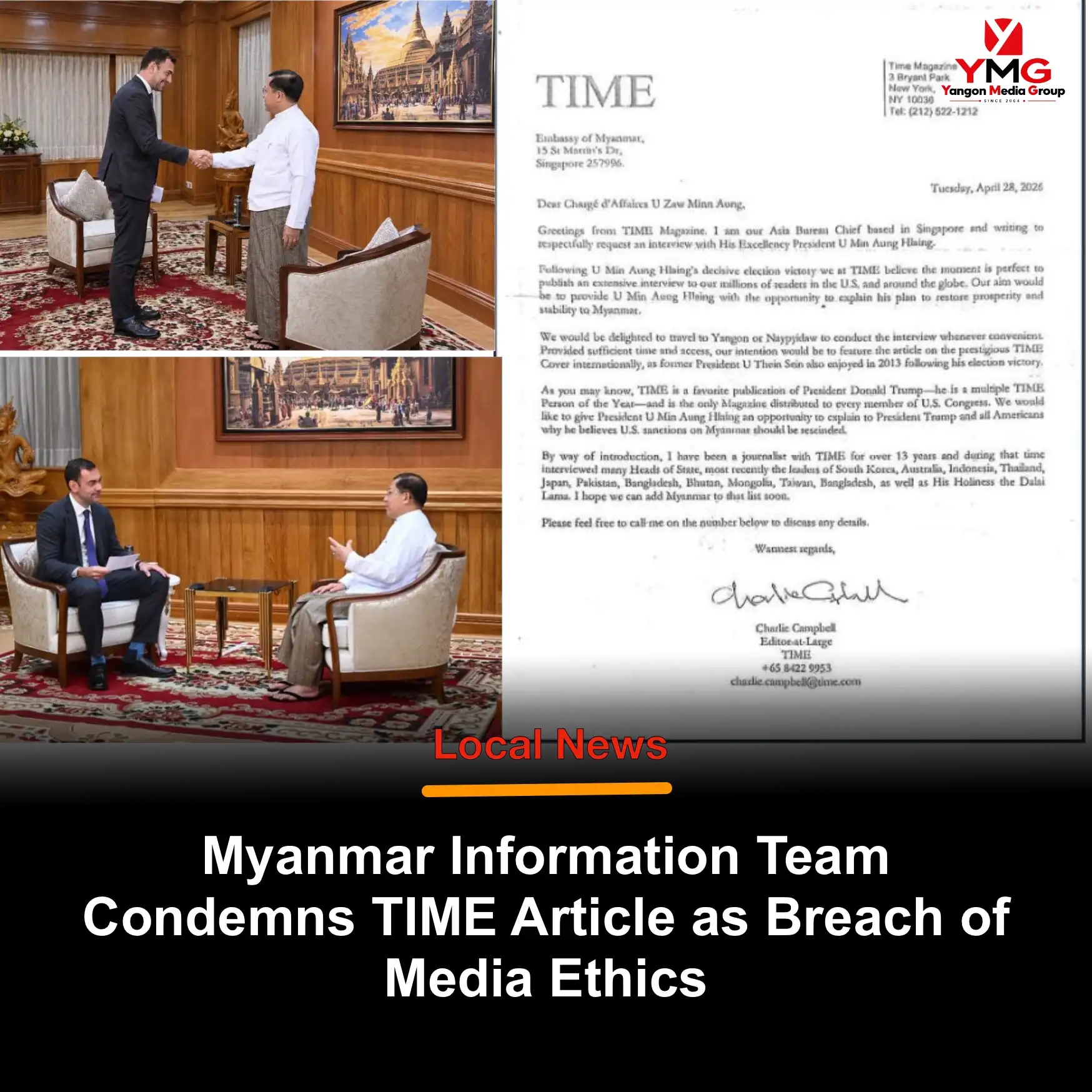
Sept. 23, 2026 — Myanmar’s Information Team condemned an article by TIME correspondent Charlie Campbell as a breach of media ethics, saying the magazine had sought an interview with the president for a story on Myanmar’s future and peace efforts but published an article that departed from the subjects initially discussed.
According to the statement, TIME approached the Myanmar Embassy in Singapore to request an interview for a piece titled “the Future of Myanmar.” The proposed story would cover what the statement described as the state’s historic role in preserving the Union and national unity, its efforts to maintain stability, and the achievements of peace talks. The president agreed to meet Campbell and answered his questions, the statement said.
The team said TIME subsequently published an article online rather than presenting the interview in a question-and-answer format. It said the article did not accurately reflect the president’s responses and included interviews with other people, commentary and material outside the scope of the initial discussions.
The statement further said TIME had used language that could mislead international audiences about Myanmar and its government. It said the president’s full exchange with Campbell would be released separately.
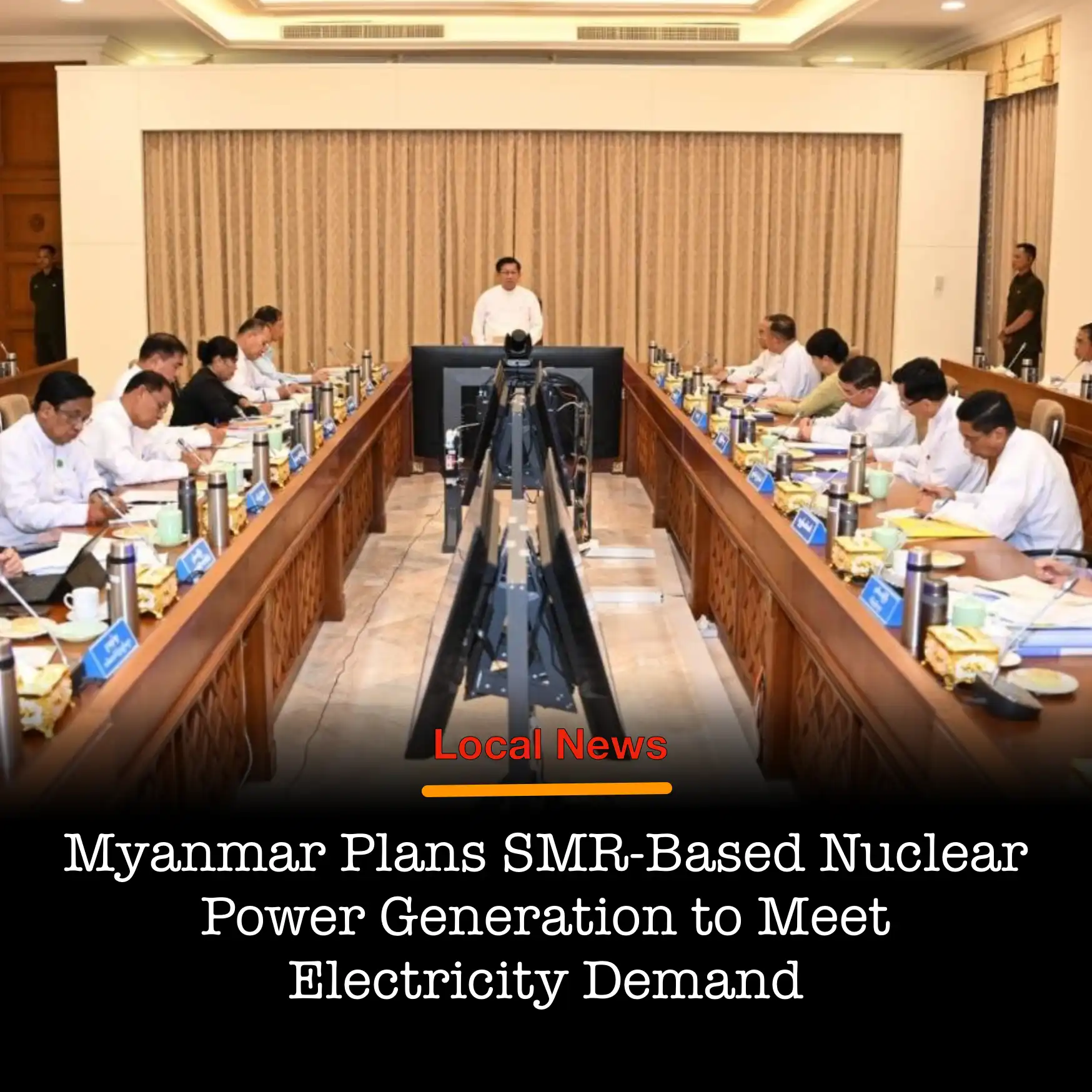
Nay Pyi Taw, September 23
Myanmar has included Small Modular Reactor (SMR)-based nuclear power generation as an option under its diversified energy policy to meet growing electricity demand and ensure long-term energy security, President U Min Aung Hlaing said on September 23.
He made the remarks at the first meeting of the National-Level Steering Committee for the Implementation of Nuclear Energy, held at the Presidential Office in Nay Pyi Taw. He said Myanmar’s energy policy should be based on an energy mix comprising renewable energy, natural gas and other energy sources, while nuclear energy should also be studied as an option for providing a stable supply of electricity.
The President said nuclear technology could be applied not only to electricity generation but also in healthcare, agriculture, food safety, industry and research. Its implementation, he added, should give priority to international standards and the “3S” principles of Safety, Security and Safeguards.
Regarding international cooperation, he said Myanmar would work with the International Atomic Energy Agency (IAEA) on technical cooperation, expert exchanges and human resource development. He also said agreements had been reached with Russia’s state-owned ROSATOM on cooperation in nuclear technology, human resource development and electricity generation using SMR technology.
U Min Aung Hlaing also called for the formulation of a Roadmap and Action Plans for future implementation, stronger coordination among relevant ministries, and greater emphasis on human resource development.
He said Myanmar’s nuclear energy programme should be based on the national interest, adding that cooperation with international partners should be assessed against the country’s long-term energy requirements, economic conditions, technological and human resource capabilities, and security situation. He also called for designated projects to be implemented in a timely manner.
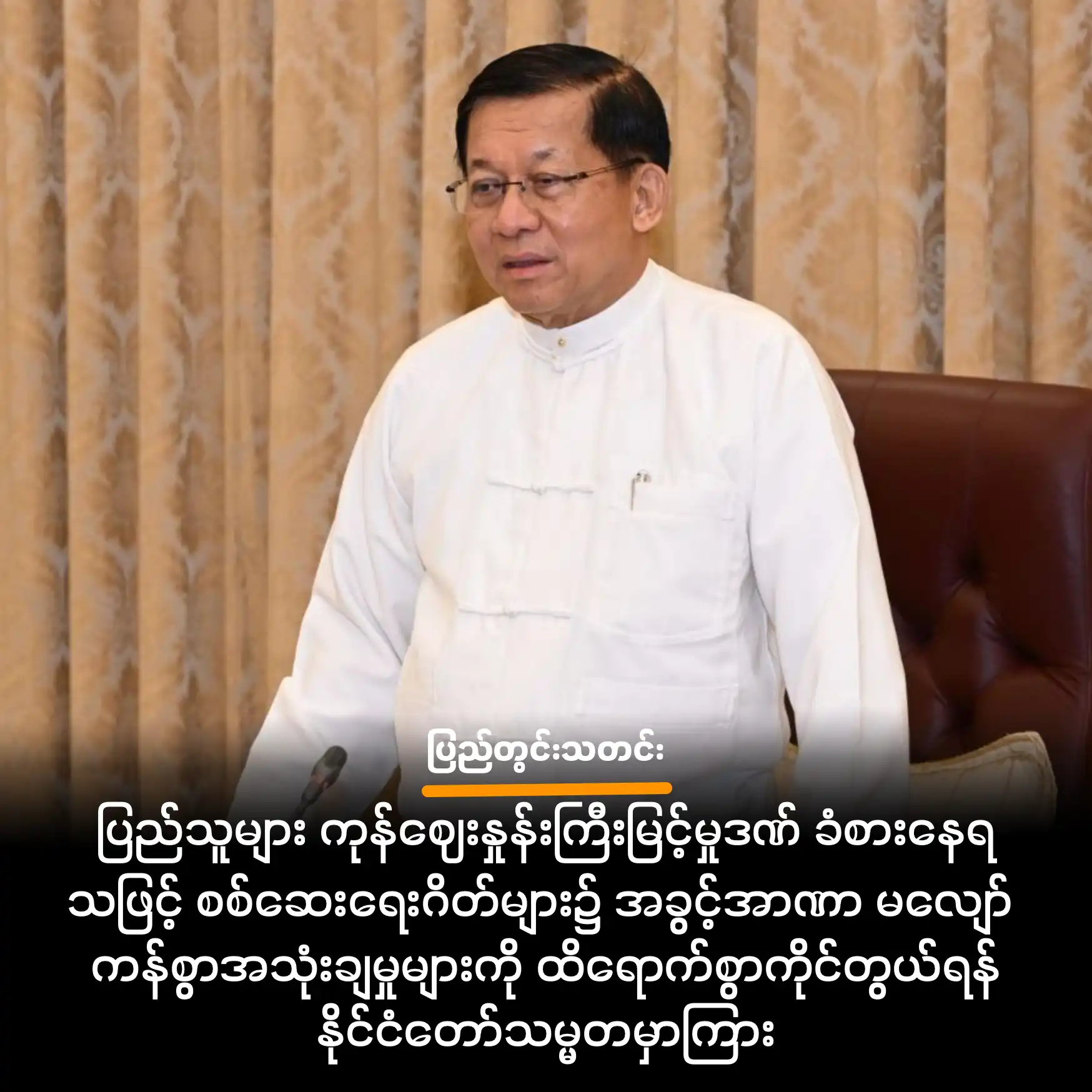
နေပြည်တော်၊ စက်တင်ဘာ ၂၃
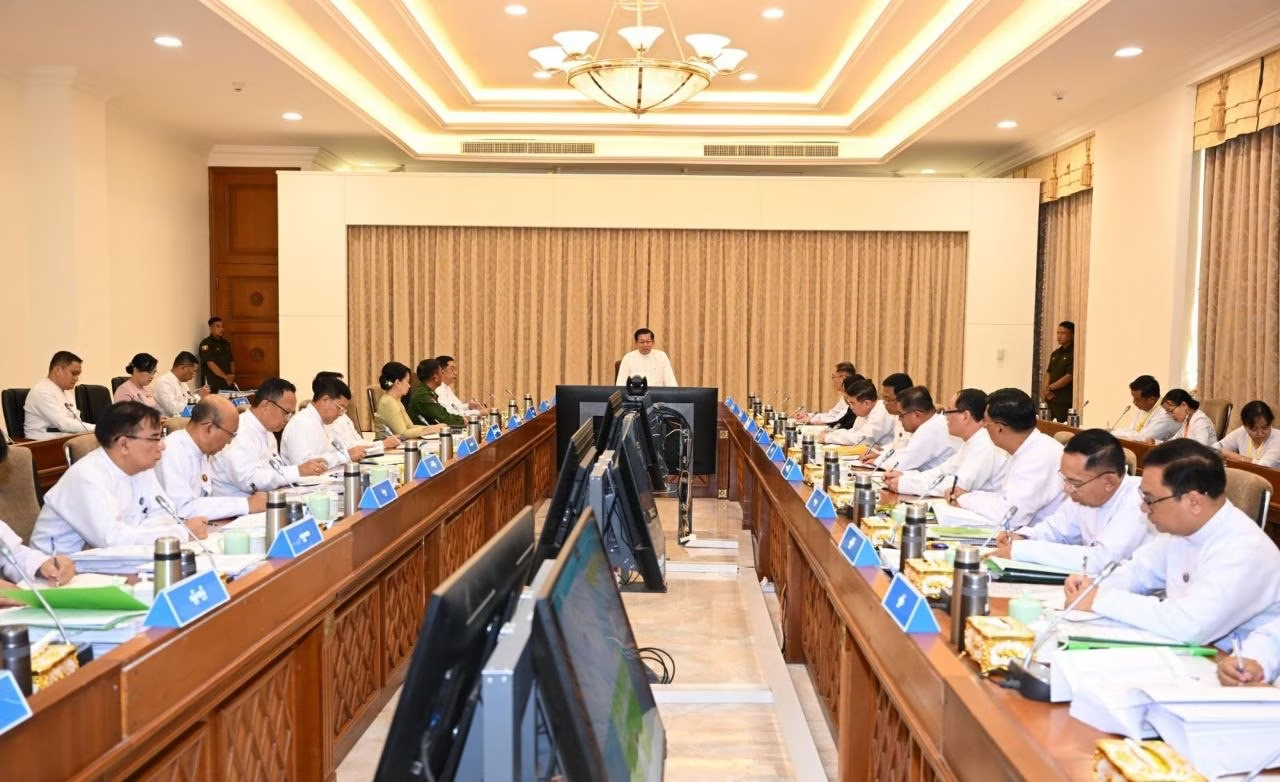
ဒေသအလိုက် လုံခြုံရေးနှင့် တရားမဝင်ကုန်စည်စီးဆင်းမှု တိုက်ဖျက်ရေးအတွက် ဖွင့်လှစ်ထားသည့် စစ်ဆေးရေးဂိတ်များ၌ လုံခြုံရေးကိုအကြောင်းပြ၍ ပေးအပ်ထားသော အခွင့်အာဏာကို မလျော်ကန် စွာအသုံးချမှုများရှိနေပြီး ယင်းကြောင့် တရားမဝင်ကုန်စည်စီးဆင်းမှုများ ဖြစ်ပေါ်ကာ ပြည်သူ များ ကုန်ဈေးနှုန်းကြီးမြင့်မှုဒဏ် ခံစားနေရသဖြင့် အဆိုပါကိစ္စများကို ထိရောက်စွာ ကိုင်တွယ်ဖြေရှင်းပြီး ဥပဒေချိုးဖောက်မှုများအား ဥပဒေနှင့်အညီ အရေးယူရန် နိုင်ငံတော်သမ္မတ ဦးမင်းအောင်လှိုင်က စက်တင်ဘာ ၂၃ ရက်တွင် မှာကြားခဲ့သည်။
နိုင်ငံတော်သမ္မတသည် နေပြည်တော်ကောင်စီဥက္ကဋ္ဌနှင့် တိုင်းဒေသကြီး၊ ပြည်နယ်ဝန်ကြီးချုပ်များအား နိုင်ငံတော်သမ္မတရုံးတော် အစည်းအဝေးခန်းမ၌ တွေ့ဆုံစဉ် ယင်းသို့ ပြောကြားခဲ့ခြင်းဖြစ်ပြီး တွေ့ဆုံပွဲသို့ ဒုတိယသမ္မတ ဦးညိုစော၊ ပြည်ထောင်စုဝန်ကြီးများနှင့် တာဝန်ရှိသူများ တက်ရောက်ခဲ့ကြသည်။
လတ်တလော ပြည်သူများ ရင်ဆိုင်နေရသည့် ကုန်ဈေးနှုန်းကြီးမြင့်မှုကို ဒေသအလိုက် တာဝန်ရှိသူများက လက်တွေ့ကျကျ ဖြေရှင်းရန်နှင့် ဒေသတွင်း စားနပ်ရိက္ခာဖူလုံရေးအတွက် စိုက်ပျိုးရေးနှင့် မွေးမြူရေးလုပ်ငန်းများကို လိုအပ်ချက်အပေါ်မူတည်၍ စနစ်တကျ တိုးချဲ့ဆောင်ရွက်ရန်လည်း ဦးမင်းအောင်လှိုင်က ပြောကြားခဲ့သည်။ စိုက်ပျိုးမွေးမြူရေးအတွက် ခွင့်ပြုထားသည့် မြေများကို ရည်ရွယ်ချက်နှင့်မညီဘဲ အခြားနည်းလမ်းဖြင့် အသုံးပြုနေမှုများကိုလည်း ဥပဒေ၊ စည်းမျဉ်းစည်းကမ်းများနှင့်အညီ ကြပ်မတ်ရန် မှာကြားခဲ့သည်။
ပြည်တွင်းစားသုံးဆီဖူလုံရေးအတွက် နှမ်း၊ နေကြာ၊ မြေပဲ၊ ပဲပုတ်နှင့် ဆီအုန်းအပါအဝင် ဆီထွက် သီးနှံများကို ပန်းတိုင်အထွက်နှုန်းရရှိအောင် စိုက်ပျိုးထုတ်လုပ်ရန်နှင့် ယင်းသို့ ဆောင်ရွက်နိုင်ပါက ပြည်ပမှ စားသုံးဆီနှစ်စဉ်တင်သွင်းနေရမှုကို လျှော့ချနိုင်မည်ဟု ၎င်းက ပြောကြားခဲ့သည်။ တနင်္သာရီ တိုင်းဒေသကြီး၌ ဆီအုန်းစိုက်ပျိုးထုတ်လုပ်မှု တိုးမြှင့်နိုင်ပါက တနင်္သာရီ၊ မွန်နှင့် ကရင်ဒေသတို့၏ စားသုံးဆီလိုအပ်ချက်ကို ဖြည့်ဆည်းရာတွင် အထောက်အကူဖြစ်စေနိုင်ကြောင်းလည်း ဆိုသည်။
စိုက်ပျိုးရေးကဏ္ဍတွင် တစ်ဧကအထွက်နှုန်း မြင့်မားရေးအတွက် “မျိုး၊ မြေ၊ ရေ၊ နည်း” အချက်လေးရပ်ကို စနစ်တကျ ဆောင်ရွက်ရန်၊ တောင်သူတစ်ဦးချင်း၏ အကျိုးစီးပွားကို ဖော်ဆောင်နိုင်ရေး စုပေါင်းသမဝါယမစနစ်ဖြင့် စိုက်ပျိုးရေးလုပ်ငန်းများ အကောင်အထည်ဖော်ရန်နှင့် လိုအပ်သည့် စိုက်ပျိုးရေးချေးငွေများ ဖြည့်ဆည်းပေးရန် ပြောကြားခဲ့သည်။ သီးထပ်စွမ်းအား တိုးမြှင့်ရာတွင်လည်း အခြေခံကိန်းဂဏန်းများ မှန်ကန်ရန်နှင့် ရာသီဥတု၊ မြေအနေအထားနှင့် ကိုက်ညီ သည့်သီးနှံများကို အချိန်မီစိုက်ပျိုးရန် လိုအပ်ကြောင်းလည်း နိုင်ငံတော်သမ္မတက မှာကြားသည်။
ပညာရေးကဏ္ဍနှင့်ပတ်သက်၍ တစ်မျိုးသားလုံး ပညာရည်မြင့်မားရေးကို ဦးစားပေးပြီး KG+9 အထိ မသင်မနေရပညာရေးစနစ်ကို ဆက်လက်အကောင်အထည်ဖော်ရန်၊ ကျောင်းနေအရွယ်ကလေးအားလုံး ကျောင်းတက်နိုင်ရေးနှင့် တန်းစဉ်ကူးပြောင်းမှု မြင့်မားလာရေး ဆောင်ရွက်ရန် ဦးမင်းအောင်လှိုင်က မှာကြားခဲ့သည်။ အခြေခံပညာကျောင်းများတွင် ဆရာ၊ ဆရာမလိုအပ်ချက်များကို ဖြည့်ဆည်းရန်၊ ပညာရေးဒီဂရီကောလိပ်များမှ သင်တန်းဆင်းများကို စနစ်တကျ နေရာချထားရန်နှင့် စာကြည့်တိုက်များအတွက် သုတ၊ ရသ စာအုပ်စာစောင်များ ဖြည့်ဆည်းပေးရန်လည်း ပြောကြားခဲ့သည်။
နယ်စပ်ဒေသနှင့် တိုင်းရင်းသားလူမျိုးများ ဖွံ့ဖြိုးတိုးတက်ရေးအတွက် ပူတာအိုဒေသ၌ ဒေသနှင့် ကိုက်ညီသည့် ဒီဂရီကောလိပ်တစ်ခု ဖွင့်လှစ်ရန်နှင့် ဥပဒေ၊ စီးပွားရေးဘာသာရပ်များအပါအဝင် သင့်လျော်သည့် ဘာသာရပ်များဖြင့် သင်ကြားနိုင်ရေး သက်ဆိုင်ရာဝန်ကြီးဌာနက ဆက်လက် ဆောင်ရွက်ရန်လည်း မှာကြားခဲ့သည်။
ရာသီဥတုပြောင်းလဲမှုနှင့် အယ်လ်နီညိုဖြစ်စဉ်ကြောင့် အပူချိန်လွန်ကဲမှု၊ မြေအောက်ရေလျော့နည်းမှုနှင့် ရေအရင်းအမြစ်ရှားပါးမှုများ ဖြစ်ပေါ်နိုင်သဖြင့် သောက်သုံးရေနှင့် စိုက်ပျိုးရေများ ကြိုတင် စုဆောင်းထားရန်၊ ရေကို အကျိုးရှိစွာအသုံးပြုရေး အသိပညာပေးရန်နှင့် လိုအပ်ပါက မြစ်ချောင်းများ၌ မြေအောက်တမံများပြုလုပ်ကာ မြေအောက်ရေထိန်းသိမ်းရေး ဆောင်ရွက်ရန်လည်း ပြောကြားခဲ့သည်။ မလိုအပ်ဘဲ သစ်ခုတ်ခြင်းများ တားမြစ်ရန်နှင့် သစ်ပင်စိုက်ပျိုးမှု တိုးမြှင့်ရန်လည်း တိုက်တွန်းခဲ့သည်။
ထို့ပြင် ဒေသအလိုက် ခေတ်စနစ်နှင့် လျော်ညီသည့် ဥပဒေများ ပြင်ဆင်ရေးဆွဲရေး၊ ဆင်းရဲမွဲတေမှု လျှော့ချရေးနှင့် ပြည်သူများ အလုပ်အကိုင်ရရှိရေး၊ အခွန်ရသင့်ရထိုက်မှု မှန်ကန်စွာရရှိရေးနှင့် အခွန်ရှောင်မှု တားဆီးရေးတို့ကို အလေးထားဆောင်ရွက်ရန် မှာကြားခဲ့သည်။ နိုင်ငံသားစိစစ်ရေးကတ် ထုတ်ပေးရာတွင်လည်း မသမာသည့်နည်းလမ်းဖြင့် နိုင်ငံသားဖြစ်ခွင့်ရယူမှုနှင့် နိုင်ငံသားအယောင်ဆောင် မှုများကို စိစစ်ဖော်ထုတ်၍ သက်ဆိုင်ရာဥပဒေနှင့်အညီ အရေးယူရန် ပြောကြားခဲ့သည်။
အစည်းအဝေးတွင် ပြည်ထောင်စုဝန်ကြီးများ၊ နေပြည်တော်ကောင်စီဥက္ကဋ္ဌနှင့် တိုင်းဒေသကြီး၊ ပြည်နယ်ဝန်ကြီးချုပ်များက ဒေသအလိုက် ကုန်ဈေးနှုန်းကျဆင်းရေးနှင့် စားနပ်ရိက္ခာဖူလုံရေး၊ ဆီထွက်သီးနှံစိုက်ပျိုးရေး၊ ပညာရေး၊ စိုက်ပျိုးမွေးမြူရေးနှင့် MSME လုပ်ငန်းများ ဖွံ့ဖြိုးရေး၊ ရေရှားပါးမှုအတွက် ကြိုတင်ပြင်ဆင်ရေး၊ ယာယီနေရပ်စွန့်ခွာသူများ ပြန်လည်အခြေချနေထိုင်နိုင်ရေးနှင့် ဒေသဖွံ့ဖြိုးရေးလုပ်ငန်းများ ဆောင်ရွက်နေမှုတို့ကို ရှင်းလင်းတင်ပြခဲ့ကြောင်း သိရသည်။

နေပြည်တော်၊ စက်တင်ဘာ ၂၁
လယ်ယာနှင့် မွေးမြူရေးကဏ္ဍကို ရိုးရာထုတ်လုပ်မှုစနစ်မှ ခေတ်မီ၊ ထိရောက်ပြီး ရေရှည်တည်တံ့သည့် ထုတ်လုပ်မှုစနစ်သို့ ပြောင်းလဲကာ ကုန်ကြမ်းအဆင့်မှ တန်ဖိုးမြှင့်ထုတ်ကုန်၊ စက်မှုလုပ်ငန်းနှင့် ပြည်တွင်း၊ ပြည်ပဈေးကွက်အထိ တန်ဖိုးကွင်းဆက်တစ်လျှောက် ချိတ်ဆက်ဖော်ဆောင်၍ နိုင်ငံ့ထုတ်ကုန်နှင့် ပြည်သူ့ဝင်ငွေ တိုးတက်စေရန် ဆောင်ရွက်သွားကြရမည်ဟု နိုင်ငံတော်သမ္မတ ဦးမင်းအောင်လှိုင်က ပြောကြားသည်။
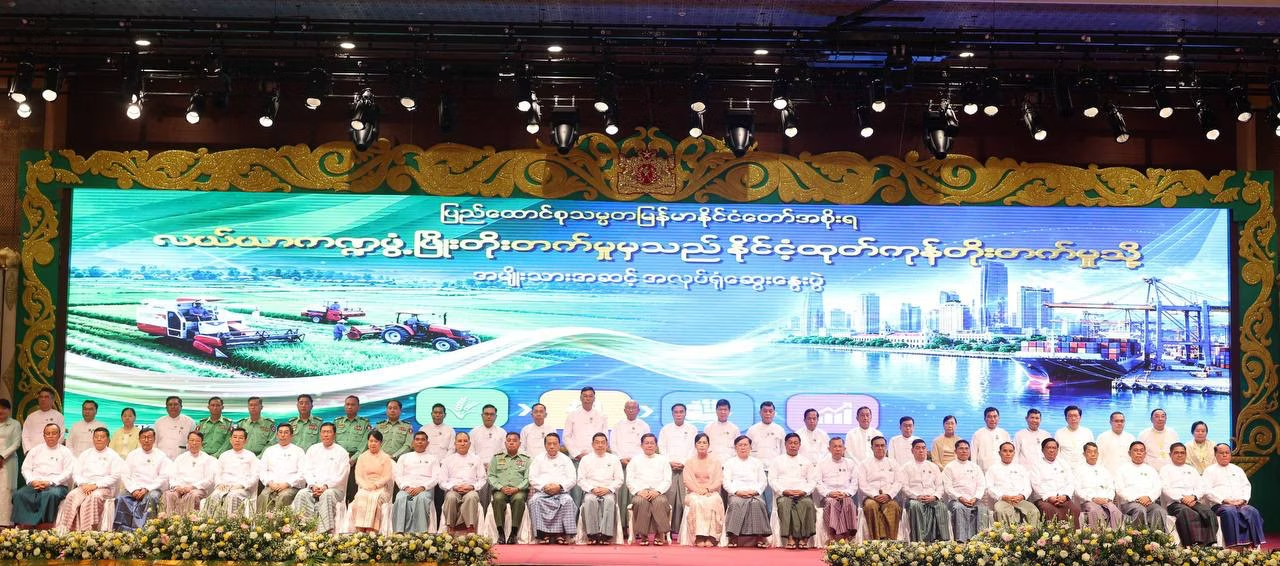
နိုင်ငံတော်သမ္မတက စက်တင်ဘာ ၂၁ ရက် နံနက်ပိုင်းတွင် နေပြည်တော်ရှိ မြန်မာအပြည်ပြည်ဆိုင်ရာ ကွန်ဗင်းရှင်းဗဟိုဌာန-၁ (MICC-1) ၌ ကျင်းပသည့် “လယ်ယာကဏ္ဍ ဖွံ့ဖြိုးတိုးတက်မှုမှသည် နိုင်ငံ့ထုတ်ကုန် တိုးတက်မှုသို့” အမျိုးသားအဆင့် အလုပ်ရုံဆွေးနွေးပွဲတွင် အဖွင့်အမှာစကား ပြောကြားရာ၌ ယင်းသို့ ထည့်သွင်းပြောကြားခဲ့ခြင်းဖြစ်သည်။
နိုင်ငံတော်သမ္မတက မြန်မာနိုင်ငံ လူဦးရေ၏ ၇၀ ရာခိုင်နှုန်းခန့်သည် ကျေးလက်ဒေသများတွင် နေထိုင်ကြပြီး အလုပ်လုပ်ကိုင်သူများအနက် ၅၀ ရာခိုင်နှုန်းကျော်သည် လယ်ယာ၊ သားငါးနှင့် သစ်တောကဏ္ဍတို့တွင် လုပ်ကိုင်နေကြသဖြင့် ကျေးလက်နေပြည်သူများ၏ ဝင်ငွေတိုးတက်ရေးသည် အရေးကြီးကြောင်း ပြောသည်။
လယ်ယာကဏ္ဍ ဖွံ့ဖြိုးတိုးတက်ရေးကို စိုက်ပျိုးထုတ်လုပ်မှုပမာဏ တိုးမြှင့်ရေးအဖြစ်သာ မမြင်သင့်ဘဲ ထုတ်လုပ်မှု၊ ကုန်ကြမ်း၊ ပြုပြင်ထုတ်လုပ်မှု၊ တန်ဖိုးမြှင့်ထုတ်ကုန်၊ စက်မှုလုပ်ငန်း၊ ပြည်တွင်းစားသုံးမှုနှင့် ပြည်ပပို့ကုန်အထိ တန်ဖိုးကွင်းဆက်တစ်ခုလုံးကို ချိတ်ဆက်စဉ်းစားရန် လိုအပ်ကြောင်း နိုင်ငံတော်သမ္မတက ဆိုသည်။
ယင်းသို့ ဆောင်ရွက်နိုင်ပါက တောင်သူများ၏ ဝင်ငွေတိုးတက်လာခြင်း၊ အလုပ်အကိုင်အခွင့်အလမ်းများ တိုးပွားလာခြင်း၊ ပြည်တွင်းကုန်ထုတ်လုပ်မှုနှင့် ပို့ကုန်တိုးတက်လာခြင်းတို့မှတစ်ဆင့် နိုင်ငံ့ထုတ်ကုန်နှင့် စီးပွားရေးတိုးတက်လာနိုင်မည်ဟု ပြောကြားသည်။
လက်ရှိကာလတွင် အခြေခံစားသောက်ကုန်ဈေးနှုန်းများ မြင့်တက်နေခြင်းသည် ပြည်သူများ၏ နေ့စဉ်ဘဝအတွက် စိန်ခေါ်မှုဖြစ်နေပြီး ယင်းမှာ ထုတ်လုပ်မှုနှင့် စားသုံးမှု မမျှတခြင်း၊ ထုတ်လုပ်မှုကုန်ကျစရိတ်နှင့် သယ်ယူပို့ဆောင်ရေးစရိတ် မြင့်မားခြင်းတို့နှင့် သက်ဆိုင်နေကြောင်း နိုင်ငံတော်သမ္မတက ပြောသည်။ ထို့ကြောင့် စားနပ်ရိက္ခာထုတ်လုပ်မှု ပမာဏတိုးမြှင့်ကာ ပြည်တွင်းလိုအပ်ချက်ကို လုံလောက်စွာ ဖြည့်ဆည်းနိုင်ရေး လိုအပ်ကြောင်း ထည့်သွင်းပြောကြားသည်။
နိုင်ငံတော်သမ္မတက ၂၀၂၅-၂၀၂၆ ဘဏ္ဍာနှစ်တွင် စပါးစိုက်ဧက စုစုပေါင်း ၁၇ ဒသမ ၄ သန်းခန့်ရှိပြီး ပျမ်းမျှအထွက်နှုန်း ၈၅ တင်းခန့်သာရှိကြောင်း၊ ပန်းတိုင်အထွက်နှုန်းအတိုင်း ထုတ်လုပ်နိုင်ပါက လက်ရှိထက် အမေရိကန်ဒေါ်လာ ၃ ဘီလီယံခန့် ပိုမိုရရှိနိုင်မည်ဖြစ်ကြောင်း ပြောသည်။
ထို့ပြင် နိုင်ငံတော်က အားပေးစိုက်ပျိုးနေသည့် သီးနှံကိုးမျိုးကို ဒေသအလိုက် ရာသီဥတုနှင့် မြေအမျိုးအစားအရ သင့်လျော်သည့်နေရာများတွင် တိုးချဲ့စိုက်ပျိုးကာ ပန်းတိုင်အထွက်နှုန်းရရှိအောင် ဆောင်ရွက်နိုင်ပါက ပို့ကုန်ဝင်ငွေ အမေရိကန်ဒေါ်လာ ၆ ဒသမ ၅ ဘီလီယံခန့် ပိုမိုရရှိနိုင်မည်ဟု ဆိုသည်။
စားသုံးဆီကဏ္ဍတွင် မြေပဲ၊ နှမ်း၊ နေကြာ၊ ပဲပုပ်နှင့် ဆီအုန်းကဲ့သို့ ဆီထွက်သီးနှံများကို ဒေသအလိုက် တိုးချဲ့စိုက်ပျိုးရန်၊ ထုတ်လုပ်မှုကုန်ကျစရိတ် လျှော့ချရန်နှင့် စားအုန်းဆီတင်သွင်းမှုကို အဆင့်လိုက်လျှော့ချနိုင်ရေး ဆောင်ရွက်ရန် လိုအပ်ကြောင်း နိုင်ငံတော်သမ္မတက ပြောသည်။
ထို့အပြင် ဆန်စပါးမှ ထွက်ရှိသည့် ဖွဲနု၊ ဖွဲကြမ်း၊ ဆန်ကွဲနှင့် စပါးခွံကဲ့သို့ ဘေးထွက်ပစ္စည်းများကို စားသုံးဆီ၊ တိရစ္ဆာန်အစာနှင့် လောင်စာအဖြစ် ပြန်လည်အသုံးချနိုင်ပြီး ထုတ်ကုန်တစ်မျိုးတည်းအပေါ် မူတည်ခြင်းမဟုတ်ဘဲ ဘေးထွက်ပစ္စည်းများကိုပါ တန်ဖိုးဖန်တီးအသုံးချရန် လိုအပ်ကြောင်း ဆိုသည်။
မွေးမြူရေးကဏ္ဍနှင့်ပတ်သက်၍လည်း ကြက်၊ ဝက်၊ ဆိတ်၊ နွားနှင့် ငါးမွေးမြူရေးတို့တွင် မျိုးကောင်းမျိုးသန့်၊ အစာစရိတ်၊ နည်းပညာနှင့် ဈေးကွက်ချိတ်ဆက်မှုတို့ကို မြှင့်တင်ကာ ပြည်တွင်းစားသုံးမှုလိုအပ်ချက် ဖြည့်ဆည်းနိုင်ရေးနှင့် ပိုလျှံထုတ်ကုန်များကို ပြည်ပဈေးကွက်သို့ တင်ပို့နိုင်ရေး ရည်မှန်းဆောင်ရွက်ရန် လိုအပ်ကြောင်း ပြောသည်။
လယ်ယာထွက်ကုန်များကို ကုန်ကြမ်းအတိုင်း ရောင်းချခြင်းထက် Agro-based Industries များ ဖွံ့ဖြိုးတိုးတက်အောင် ဆောင်ရွက်ရန်လိုပြီး ဆန်၊ ပဲ၊ ဆီထွက်သီးနှံ၊ ဝါ၊ ဝါး၊ ကော်ဖီနှင့် သစ်သီးဝလံများကို ပြုပြင်ထုတ်လုပ်ခြင်း၊ ထုပ်ပိုးခြင်း၊ အရည်အသွေးမြှင့်တင်ခြင်းနှင့် အမှတ်တံဆိပ် ဖော်ဆောင်ခြင်းတို့မှတစ်ဆင့် တန်ဖိုးမြင့်ထုတ်ကုန်များအဖြစ် ပြောင်းလဲထုတ်လုပ်ရန် လိုအပ်ကြောင်း နိုင်ငံတော်သမ္မတက ပြောသည်။
ဒေသတစ်ခုချင်းစီ၏ သဘာဝအရင်းအမြစ်၊ ရာသီဥတုနှင့် မြေဆီလွှာဆိုင်ရာ အားသာချက်များကို အခြေခံ၍ One Region One Product (OROP) ပုံစံဖြင့် ဒေသထွက်ကုန်များကို ရွေးချယ်ကာ အရည်အသွေးမြှင့်တင်ခြင်း၊ တန်ဖိုးမြှင့်ထုတ်လုပ်ခြင်း၊ အမှတ်တံဆိပ်ဖော်ဆောင်ခြင်းနှင့် ပြည်တွင်း၊ ပြည်ပဈေးကွက်ချိတ်ဆက်ခြင်းတို့ကို စနစ်တကျ ဆောင်ရွက်နိုင်ကြောင်းလည်း ဆိုသည်။
နိုင်ငံတော်သမ္မတက အလုပ်ရုံဆွေးနွေးပွဲမှ အခြေအနေသုံးသပ်ချက်များသာမက ဦးစားပေး ဆောင်ရွက်ရမည့် ကဏ္ဍများ၊ မဟာဗျူဟာလုပ်ငန်းစဉ်များ၊ နှစ်တိုနှင့် နှစ်လတ်လုပ်ငန်းစီမံချက်များ၊ တာဝန်ယူမည့်အဖွဲ့အစည်းများ၊ ဘဏ္ဍာရေးနှင့် ရင်းနှီးမြှုပ်နှံမှု၊ နည်းပညာနှင့် လူ့စွမ်းအားအရင်းအမြစ် လိုအပ်ချက်များ၊ ဈေးကွက်နှင့် ပို့ကုန်ချိတ်ဆက်ရေး နည်းလမ်းများ ပါဝင်သည့် လက်တွေ့အကောင်အထည်ဖော်နိုင်သော Action Plan များ ထွက်ပေါ်လာရန် လိုအပ်ကြောင်း ပြောကြားသည်။
ယင်းလုပ်ငန်းစဉ်များ အောင်မြင်ရေးအတွက် အစိုးရ၊ တောင်သူလယ်သမားများ၊ ပုဂ္ဂလိကကဏ္ဍ၊ စက်မှုလုပ်ငန်းရှင်များ၊ ကုန်သည်များ၊ ဘဏ်နှင့် ငွေရေးကြေးရေးအဖွဲ့အစည်းများ၊ တက္ကသိုလ်များ၊ သုတေသနအဖွဲ့အစည်းများနှင့် နည်းပညာရှင်များ ပူးပေါင်းဆောင်ရွက်ရန် လိုအပ်ကြောင်း နိုင်ငံတော်သမ္မတက တိုက်တွန်းပြောကြားခဲ့သည်။
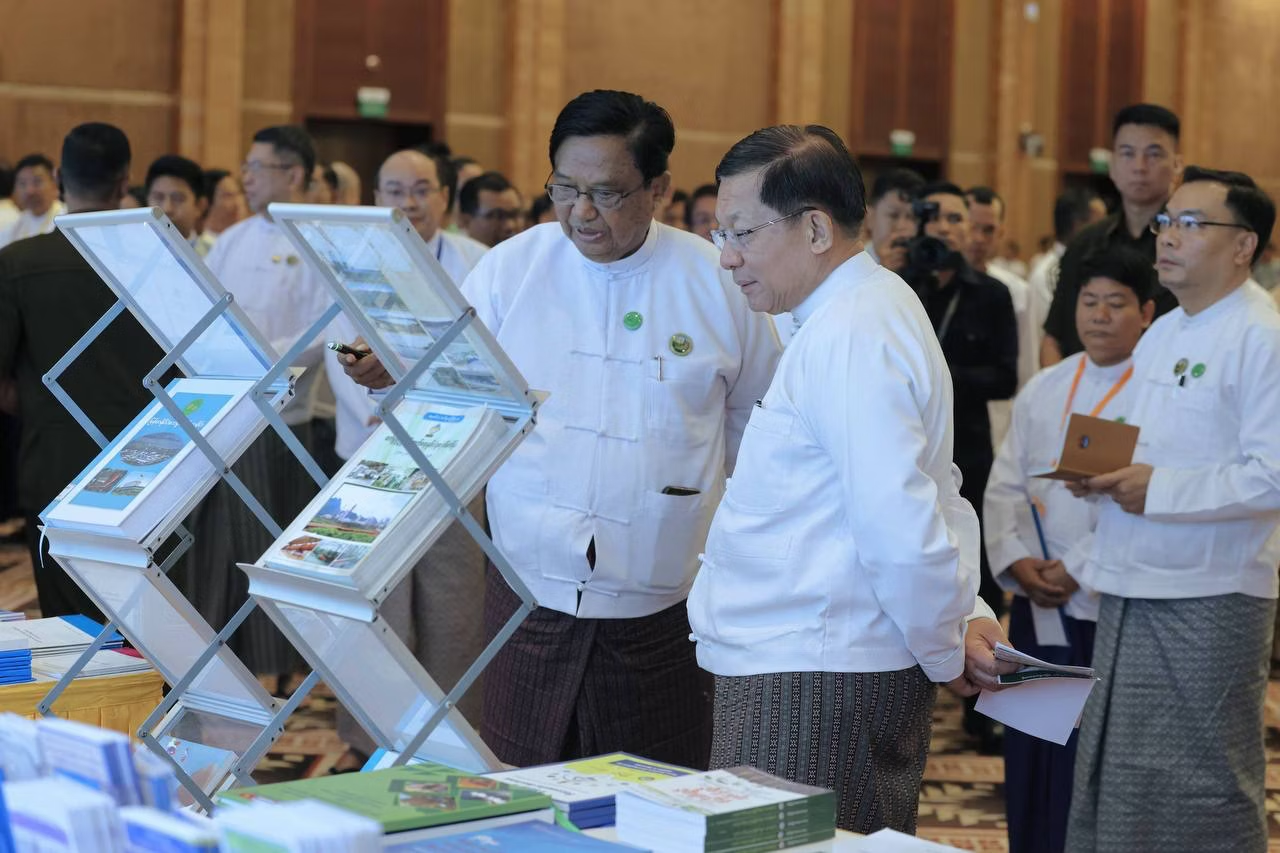
အခမ်းအနားသို့ သက်ဆိုင်ရာ တာဝန်ရှိသူများ၊ စီးပွားရေးလုပ်ငန်းရှင်များ၊ ပညာရှင်များနှင့် ဖိတ်ကြားထားသူများ တက်ရောက်ခဲ့ကြပြီး အခမ်းအနားအပြီးတွင် အလုပ်ရုံဆွေးနွေးပွဲအထိမ်းအမှတ် ပြခန်းများကို လှည့်လည်ကြည့်ရှုခဲ့ကြောင်း သိရသည်။

စက်တင်ဘာ ၁၈၊၂၀၂၆
အမေရိကန်အစိုးရတာဝန်ရှိသူများ ပါဝင်သည့် ကိုယ်စားလှယ်အဖွဲ့တစ်ဖွဲ့သည် ယခုသီတင်းပတ်အတွင်း မြန်မာနိုင်ငံသို့ သွားရောက်ကာ ဖမ်းဆီးထိန်းသိမ်းခံထားရသည့် အမေရိကန်နိုင်ငံသား စီးပွားရေး လုပ်ငန်းရှင် Adam Castillo လွတ်မြောက်ရေးအတွက် မြန်မာအစိုးရတာဝန်ရှိသူများနှင့် တွေ့ဆုံခဲ့ ကြောင်း အမေရိကန်နိုင်ငံခြားရေးဝန်ကြီးဌာန ပြောရေးဆိုခွင့်ရှိသူတစ်ဦးက ပြောကြားချက်ကိုကိုးကား၍ Reuters သတင်းဌာနက စက်တင်ဘာ ၁၇ ရက်တွင် သတင်းရေးသားသည်။
Reuters ၏ ဖော်ပြချက်အရ အမေရိကန်နိုင်ငံသည် မြန်မာနိုင်ငံတွင် သံတမန်ရေးရာ ကိုယ်စားပြုမှုကို ဆက်လက်ထားရှိထားပြီး မြန်မာအစိုးရအပါအဝင် နိုင်ငံအတွင်းရှိ အဖွဲ့အစည်းအားလုံးနှင့် ထိတွေ့ ဆက်ဆံလျက်ရှိကြောင်း အမေရိကန်နိုင်ငံခြားရေးဝန်ကြီးဌာန ပြောရေးဆိုခွင့်ရှိသူက ပြောကြားသည်။ ယင်းထိတွေ့ဆက်ဆံမှုများတွင် နေပြည်တော်ရှိ အာဏာပိုင်များနှင့် အမေရိကန်အကျိုးစီးပွားများအပေါ် သက်ရောက်မှုရှိသည့် ကိစ္စရပ်များနှင့်ပတ်သက်၍ ဆွေးနွေးမှုများလည်း ပါဝင်ကြောင်း သတင်းတွင် ဖော်ပြထားသည်။
နေပြည်တော်ရှိ အာဏာပိုင်များနှင့် တွေ့ဆုံဆွေးနွေးမှုများ ပြုလုပ်ရာတွင် အမေရိကန်နိုင်ငံအနေဖြင့် အကြမ်းဖက်မှုများရပ်တန့်ရေး၊ လူသားချင်းစာနာထောက်ထားမှုဆိုင်ရာ အကူအညီများ ဝင်ရောက်ခွင့်ပြုရေးနှင့် နိုင်ငံရေးအကျဉ်းသားများ လွှတ်ပေးရေးတို့ကို ဆက်လက်တင်ပြသွားမည်ဖြစ်ကြောင်း နိုင်ငံခြား ရေးဝန်ကြီးဌာန ပြောရေးဆိုခွင့်ရှိသူက ပြောကြားခဲ့သည်ဟု Reuters က ဆိုသည်။
အဆိုပါကိစ္စရပ်များကို ရေရှည်တည်တံ့သော ငြိမ်းချမ်းရေးအတွက် လိုအပ်သည့် အခြေအနေများ ပေါ်ပေါက်လာစေရန် ကြိုးပမ်းမှု၏ တစ်စိတ်တစ်ပိုင်းအဖြစ် ဆွေးနွေးနေခြင်းဖြစ်ကြောင်းလည်း ၎င်းက ပြောကြားသည်။
သို့သော် မြန်မာနိုင်ငံသို့ လာရောက်ခဲ့သည့် အမေရိကန်ကိုယ်စားလှယ်အဖွဲ့တွင် မည်သူများ ပါဝင်သည်၊ မြန်မာဘက်မှ မည်သည့်တာဝန်ရှိသူများနှင့် တွေ့ဆုံခဲ့သည်ဆိုသည့် အသေးစိတ်အချက်အလက်များကို အမေရိကန်နိုင်ငံခြားရေးဝန်ကြီးဌာနက ထုတ်ဖော်ပြောကြားခြင်းမရှိကြောင်း Reuters၏ သတင်းက ရေးသားထားသည်။
Page 2 of 282