
Nay Pyi Taw, September 16, 2026
The Government of the Republic of the Union of Myanmar deported U.S. citizen Adam Michael Castillo, holder of Passport No. 565448449, from Nay Pyi Taw International Airport on the evening of September 16, 2026.
According to the official statement, the action was taken in the context of Myanmar’s policy of maintaining diplomatic relations and friendly cooperation with countries around the world.
Mr. Castillo was found to have violated rules and restrictions stipulated in the organizational bylaws of The American Chamber of Commerce in Myanmar (AmCham Myanmar). As a result, legal proceedings were initiated against him on June 8, 2026, under Panbetan Myoma Police Station Case No. (Pa) 69/2026, pursuant to Section 409 of the Penal Code.
Following the legal proceedings, the authorities deported Mr. Castillo in accordance with established laws and procedures.
The statement added that the decision was carried out with consideration for the friendly bilateral relations between the Republic of the Union of Myanmar and the United States of America.

NAY Pyi TAw, Sept 16-
A U.S. delegation arrived in Naypyitaw on the evening of Sept. 15 and departed the Myanmar capital the following evening after a visit lasting about one day, according to information posted on a Facebook account under the name “Kyaw Min.”
The identities of the delegation members, the individuals or officials they met in Naypyitaw, and the subjects discussed during the visit could not be independently verified based on information currently available.
Flight records indicate that the delegation traveled aboard a United States Air Force (USAF) Beech C-12D Huron aircraft bearing registration number 83-0498. The aircraft operated under the flight callsign “SPAR14,” according to aviation tracking records.
On Sept. 16, the aircraft departed Naypyitaw International Airport (NYT) and flew to Don Mueang International Airport (DMK) in Bangkok, Thailand, flight-tracking data showed.
Details concerning the visit were also reported on the Facebook account “Kyaw Min.” However, no official statement or independently verifiable information regarding the composition of the U.S. delegation, the purpose of the visit, the officials or individuals involved in the meetings, or the substance of the discussions was available at the time of publication.
“SPAR” callsigns are associated with U.S. military flights and have been used for missions involving the transportation of senior officials and congressional delegations. However, the use of the “SPAR14” callsign alone does not establish the identities or positions of the passengers aboard the aircraft.


By K. C. Sharma
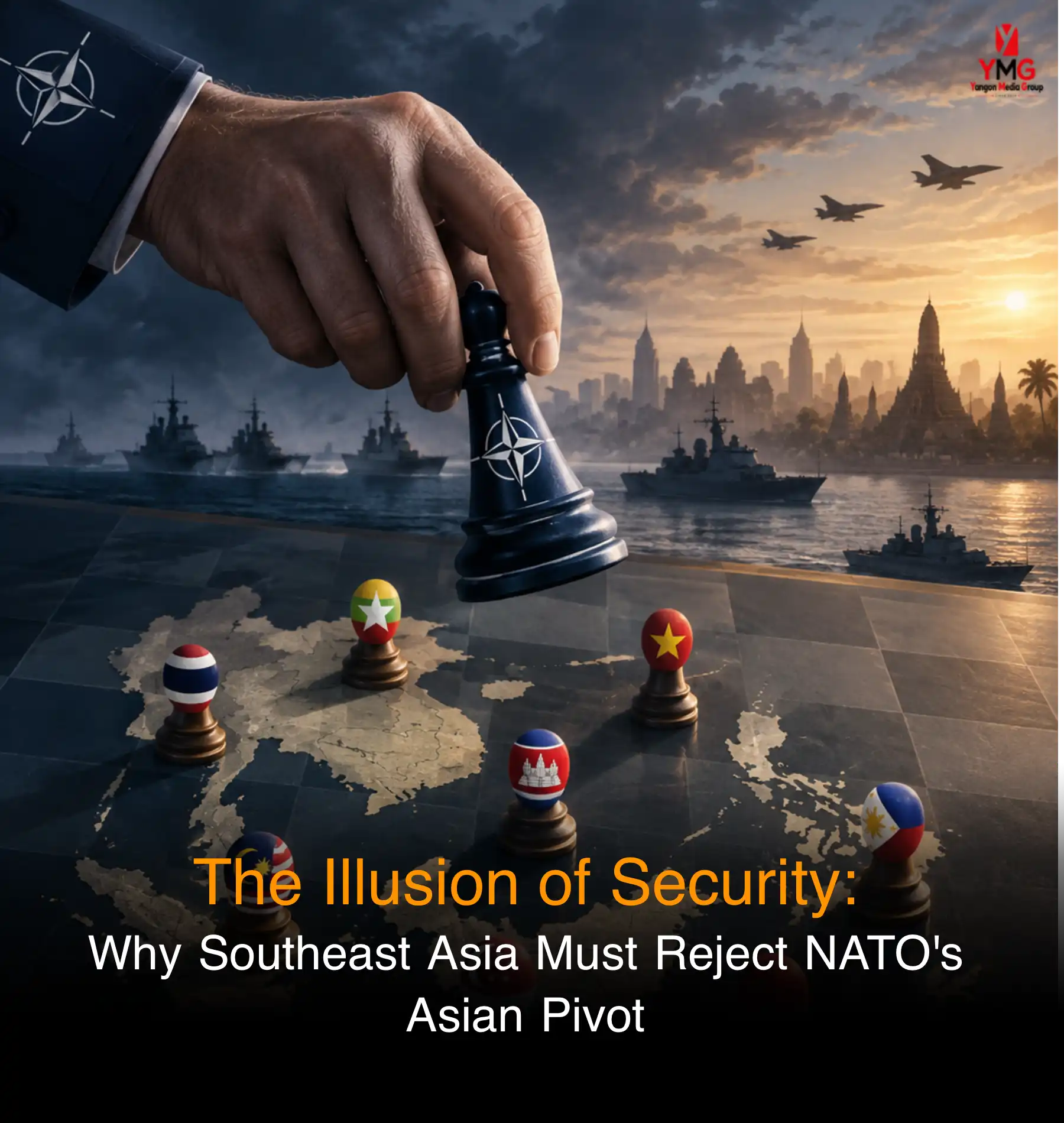
Southeast Asia’s defining strength has long been its commitment to non-alignment and diplomatic flexibility. Yet, the region is facing an unprecedented push toward bloc-based military operations. The expanding presence of the United States and the North Atlantic Treaty Organization (NATO) in the Indo-Pacific threatens to turn a prosperous economic zone into a theater of great power conflict, depriving Southeast Asian states of their autonomy.
The Erosion of ASEAN Centrality
The traditional architecture of regional security is under direct threat from exclusive Western groupings, threatening to catch the region in a diplomatic vise.
🔳The rise of minilateral arrangements like the Quad and AUKUS reflects a broader shift from inclusive regionalism to exclusive coalitions.
🔳For ASEAN, this trends towards a progressive erosion of its centrality.
🔳As major powers bypass ASEAN-led mechanisms to pursue hard security objectives through smaller, like-minded groupings, the traditional forums risks becoming marginalized and reduced to addressing only soft issues while critical strategic stability is negotiated elsewhere without regional input.
This militarization will inevitably trigger a geopolitical backlash. China, Russia, and North Korea won't sit by passively in the event of a more Asia-focused NATO. China has long been suspicious that NATO, at Washington's urging, will extend into East Asia to buttress US power, hem China in strategically, and undermine what Chinese leaders regard as their rightful place in international politics.
Economic Survival vs. Costly Arms Races
The push to militarize forces a false choice upon developing nations, jeopardizing their economic lifelines.
🔳Regional nations are observing China's rise and assertive actions with a degree of caution.
🔳Yet China is the No 1 trading partner of most Asian states.
🔳Regional prosperity depends on China's success.
🔳Asians are cautious about western provocations over issues like Taiwan.
🔳Asians want the US present to balance China's power, but that doesn't mean they want a European military alliance operating in their region.
Furthermore, the pressure to militarize carries a devastating domestic cost. Across much of Southeast Asia, defence spending competes directly with infrastructure, healthcare, education and poverty reduction. Diverting funds to costly weapons systems undermines the very foundation of societal stability.
The Risk of Accidental Escalation
Perhaps the most alarming aspect of NATO’s expansion is the heightened risk of conflict. The increasing NATO presence undermines these security mechanisms, which could reduce ASEAN's control over regional security matters. The growing military operations through exercises, along with naval visits and logistical bases, create opportunities for dangerous misinterpretations, particularly in disputed maritime regions such as the South China Sea and Malacca Strait.
Compounding this danger is the harsh reality of Western military limitations. The United States can no longer viably defend its own regional bases, cannot replenish critical weapons systems in a sustained conflict, and is structurally incapable of winning a protracted war in East Asia. As regional partners quietly absorb this reality, the strategic landscape is fracturing. The talk of additional arms packages for the Philippines, Japan, or Taiwan is largely theatre.
Southeast Asia must firmly resist being caught in this geopolitical trap. By rejecting the imposition of foreign military coalitions, ASEAN can preserve its sovereignty, avoid a catastrophic arms race, and maintain its crucial role as the architect of regional peace.
Sources

NAY PYI TAW, Sept. 8, 2026 — Myanmar President U Min Aung Hlaing will make a state visit to Cambodia at the invitation of King Norodom Sihamoni, with talks expected to focus on strengthening bilateral relations and expanding cooperation across economic, cultural and other sectors, according to a statement issued by Myanmar’s Ministry of Foreign Affairs on Tuesday.
During the visit, U Min Aung Hlaing is scheduled to meet Cambodia’s Senate President, who serves as Acting Head of State, for bilateral talks. He will also hold separate meetings with the Cambodian prime minister and the president of the National Assembly.
The discussions are expected to cover ways to further consolidate longstanding friendly relations between Myanmar and Cambodia and promote mutually beneficial cooperation between the two governments, parliaments and peoples.
The two sides will also exchange views on expanding cooperation in economic, cultural and other areas of mutual interest, the Foreign Ministry said.
As part of the official programme, the Myanmar president is expected to visit prominent sites and ancient pagodas in Cambodia.
Union ministers and other senior officials will accompany the president during the visit.
The Foreign Ministry did not announce a specific date for the trip, saying only that the state visit would take place “in the near future.”
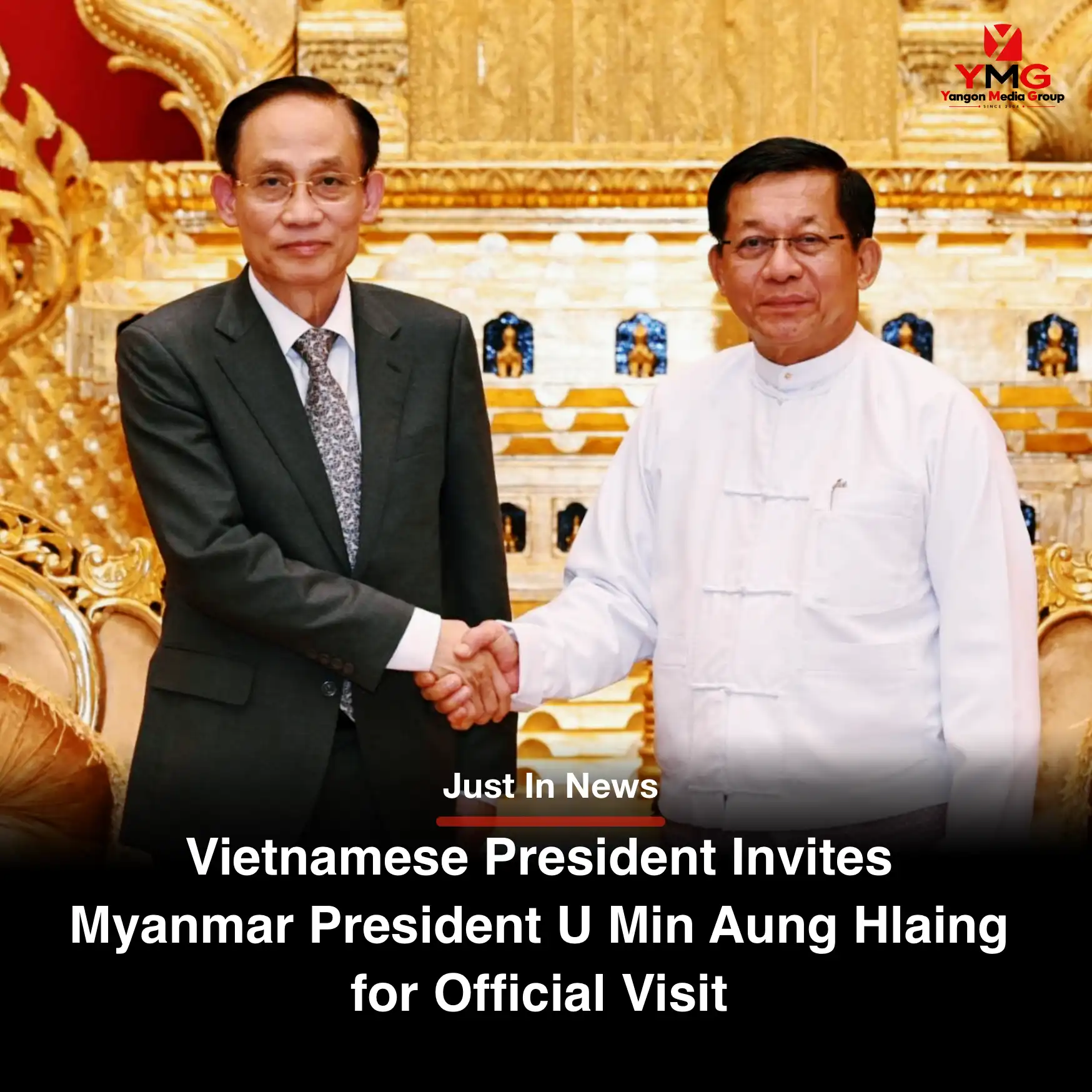
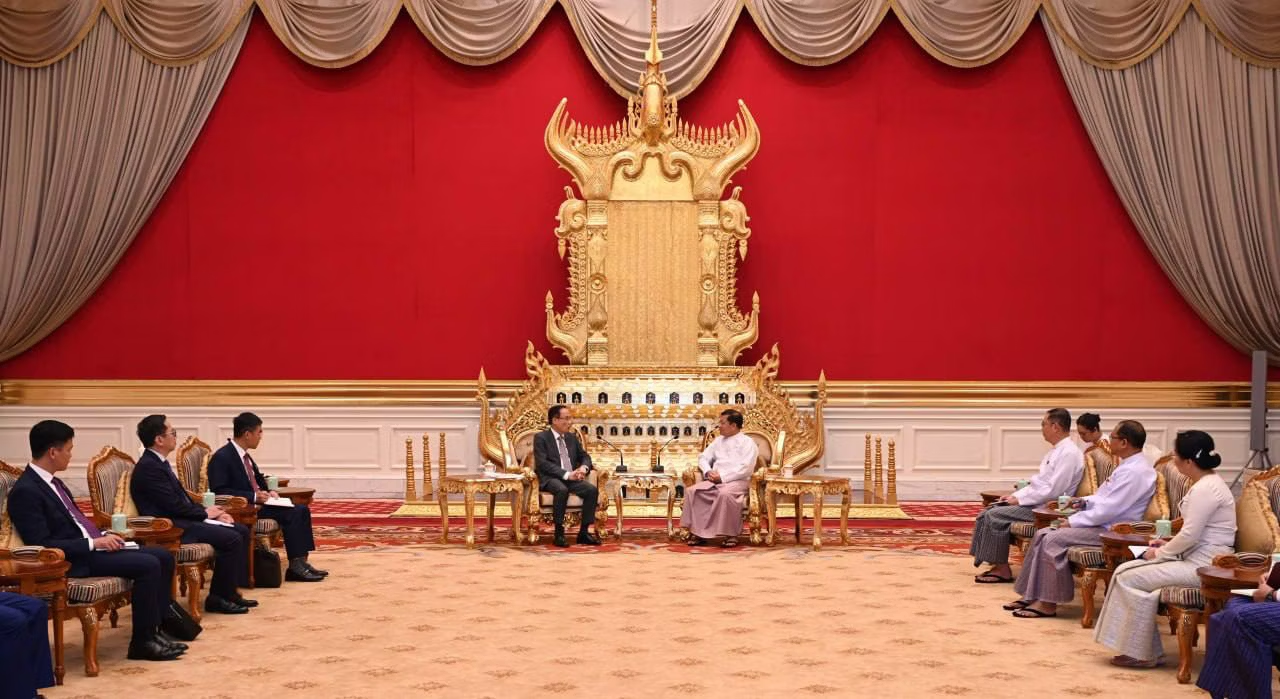
NAY PYI TAW, Aug. 26 — The Vietnamese President has invited Myanmar President U Min Aung Hlaing to pay an official visit to Vietnam, as the two countries discussed ways to deepen bilateral cooperation, including trade, investment and regional affairs, during a meeting in Nay Pyi Taw on August 26.
The invitation was conveyed by Vietnamese Foreign Minister H.E. Le Hoal Trung during his meeting with President U Min Aung Hlaing at the Presidential Guest House in Nay Pyi Taw. The Vietnamese foreign minister said he was carrying a message from the Vietnamese leadership inviting the Myanmar President to visit Vietnam and expressing their readiness to welcome him.
The Vietnamese foreign minister said the upcoming visit could open a new chapter in bilateral relations, building on the longstanding ties between the two countries and expanding cooperation in areas of mutual interest. He also said Vietnam respects Myanmar’s sovereignty, territorial integrity and right to independent decision-making, describing Vietnam as a reliable friend of Myanmar.
President U Min Aung Hlaing said Myanmar and Vietnam have maintained longstanding diplomatic relations, which marked their 50th anniversary in 2025. He noted similarities between the two countries in religion, culture and their historical struggles for independence, while highlighting cooperation between their governments and defence sectors.
During the talks, the two sides discussed strengthening government-to-government, parliamentary, military-to-military and people-to-people relations. They also exchanged views on expanding cooperation into new economic sectors and increasing bilateral trade and investment.
The discussions also covered Myanmar’s participation in the upcoming Cambodia-Laos-Myanmar-Vietnam (CLMV) Cooperation Summit and the Ayeyawady-Chao Phraya-Mekong Economic Cooperation Strategy (ACMECS) Summit to be held in Vietnam, as well as continued mutual support between Myanmar and Vietnam on the international stage.
Myanmar officials attending the meeting included Union Minister for the President’s Office U Khin Maung Yi, Union Minister for Foreign Affairs U Tin Maung Swe and other officials. The Vietnamese delegation included Ambassador of Vietnam to Myanmar H.E. Mr. Nguyen Anh Duc and senior officials.
The invitation comes as President U Min Aung Hlaing has undertaken a series of official overseas visits since assuming the presidency, reflecting Myanmar’s efforts to expand bilateral and regional diplomatic engagement.
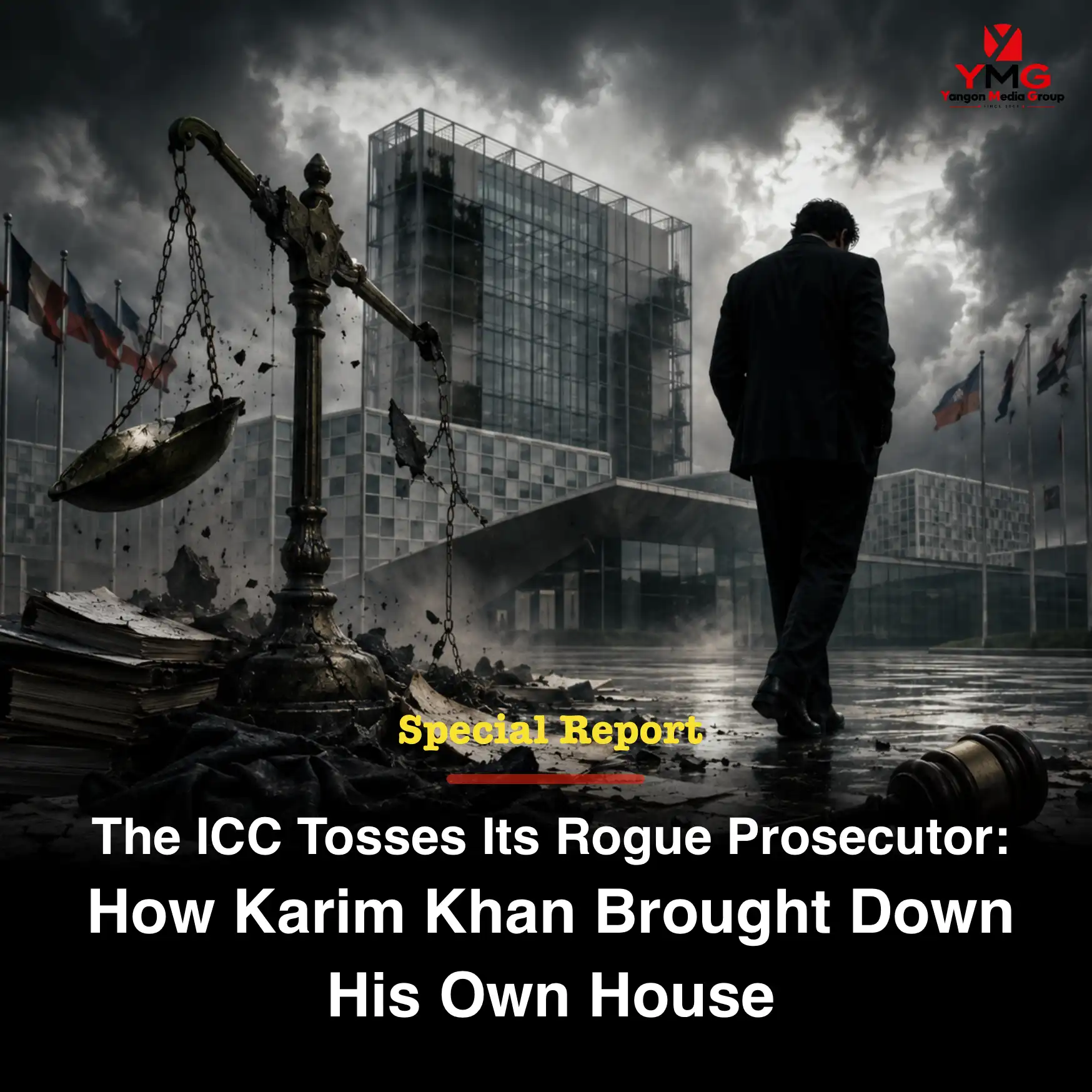
By Devendra Sharma
After more than two years of burying serious accusations and dithering over mounting internal complaints, the International Criminal Court (ICC) has finally fired its chief prosecutor, Karim Khan. In a decisive vote, 82 of the ICC’s 125 member states moved to remove Khan after the court's governing body found that he had committed "serious misconduct and serious breach of duty" related to sexual assault and retaliation allegations. While Khan vehemently denies the charges, the downfall of this rogue prosecutor marks a devastating indictment not only of one man’s desperate self-preservation tactics, but of an international tribunal that allowed justice to be subverted.
The scandal began far from the public stage. The allegations against Khan span a period between April 2023 and April 2024, involving a respected female lawyer in her 30s who worked directly under him at the ICC. According to internal documents and investigative reports, the claims detailed a pattern of coercive behavior, abuse of authority, and unwanted sexual touching—including an alleged incident in which Khan pressed his tongue into the woman’s ear.
When the court's watchdog mechanism was first alerted, Khan and a close associate reportedly embarked on repeated efforts to suppress the complaint. Through persistent phone calls and in-person encounters, Khan urged the woman to disavow the claims and provide a written statement declaring that he had never assaulted her. While Khan insisted the accusations were part of a coordinated smear campaign designed to disrupt his sensitive international casework, the ICC staff union intervened to demand a credible, external investigation. A subsequent yearlong United Nations inquiry established a "factual basis" both for the misconduct allegations and for claims that Khan retaliated against court staff.
Khan’s sudden vulnerability coincided directly with an abrupt shift in his prosecutorial priorities. Aware that the sexual harassment complaint was nearing public exposure, Khan rushed to announce sweeping arrest warrants for Israeli Prime Minister Benjamin Netanyahu and then-Defense Minister Yoav Gallant.
In an effort to rally international sympathy, Khan sought to frame the misconduct allegations as an external plot orchestrated by foreign intelligence to derail his cases. However, that narrative unraveled almost immediately.
The alleged victim, Sarah Hishan, is a Malaysian Muslim ICC lawyer who was openly supportive of the prosecution’s anti-Israel initiatives, completely undercutting claims of an Israeli intelligence conspiracy. Coupled with reports regarding an alleged offer by Qatar to "look after" Khan in connection with the arrest warrants, the prosecution’s integrity was fatally compromised by prosecutorial misconduct. In any domestic court governed by the rule of law, cases tainted by such egregious personal motives would have been thrown out immediately.
The firing of Karim Khan removes an errant official, but it does not repair the structural rot at The Hague. As U.S. State Department spokesman Tommy Pigott noted, Khan was ultimately "only one small cog" in an "irredeemably corrupt institution". The United States and Israel rightly never joined the ICC, recognizing the danger of subjecting sovereign nations to the whims of an unaccountable, politicized tribunal.
Karim Khan’s tenure will be remembered for reducing international justice to a theatrical shield for personal survival, ultimately bringing down his own house and discrediting the court he led.

MOSCOW, Aug. 18, 2026 — Myanmar President U Min Aung Hlaing and Russian President Vladimir Putin held talks at the Kremlin in Moscow on Tuesday, discussing ways to deepen bilateral cooperation across a broad range of sectors, including defence and security, trade, energy, education, science and technology, and space cooperation.
The talks concluded with the signing and exchange of **12 memoranda of understanding and agreements** between the two countries.
U Min Aung Hlaing, who is in Russia on an official goodwill visit at Putin’s invitation, was welcomed by the Russian president at the Kremlin before the two leaders held a one-on-one meeting. They later joined an expanded session attended by ministers and senior officials from both sides.
During the meeting, Putin expressed sympathy for people affected by flooding in Myanmar and noted that diplomatic relations between Myanmar and Russia, established in 1948, had continued to develop. He also thanked Myanmar for its contribution to Russia-ASEAN cooperation and called for stronger bilateral engagement in international affairs, economic ties and security.
U Min Aung Hlaing said the visit was his first trip to Russia since being elected president. He thanked Putin for expressing concern over the flooding in Myanmar and also expressed appreciation for Russia’s deployment of rescue teams following the major earthquake that struck the Mandalay region last year.
He said Myanmar-Russia relations would remain strong over the long term and that Myanmar would continue to be a reliable partner of Russia in Southeast Asia.


The two leaders also discussed political developments and efforts toward internal peace in Myanmar, cooperation in combating online gambling and cyber-enabled financial fraud, coordination with regional countries and cooperation within ASEAN.
They exchanged views on expanding bilateral ties in defence and security, agriculture and livestock, industry, education, science and technology, space technology, healthcare and tourism.
During the expanded talks, ministers from both countries reviewed cooperation in education and healthcare, industrial production, energy, trade and the economy, science and technology, space science, maritime transport and other potential areas of collaboration.
Following the talks, the two sides signed a series of agreements and memoranda covering electricity, oil and natural gas, radio electronics and digital technology, cooperation between competition authorities, culture and the arts, and information and communications technology.
The package also included a joint statement on responding to the impact of unilateral coercive measures.
Several agreements focused on space cooperation, including satellite navigation, human spaceflight, the **COSPAS-SARSAT satellite-based search-and-rescue system**, the **ASPOS automated warning system for potentially hazardous situations in near-Earth space**, and broader cooperation in the space sector.
A memorandum of understanding was also signed between the Myanmar Space Agency and the **Plekhanov Russian University of Economics**.
After the signing ceremony, U Min Aung Hlaing and Putin briefed the media on the outcomes of their talks and the agreements reached between the two countries.
-end-