
NAY PYI TAW, Feb 3 — The National Defence and Security Council of Myanmar has enacted legislation to establish a new "Union Consultative Council" aimed at advising the presidency on security, peace, and legal affairs, according to an official announcement released Tuesday.
The law, designated as National Defence and Security Council Law No. (3/2026), was signed by Acting President Senior General Min Aung Hlaing under Article 419 of the Constitution.
The council enacted the measure by exercising the legislative authority of the Pyidaungsu Hluttaw (Union Parliament), in accordance with Article 427 of the Constitution.
According to the text of the law, the President is empowered to appoint the council, which must consist of at least five members, including a Chairperson and a Secretary. The President will select suitable individuals to fill these roles.
The council’s primary mandate is to provide counsel and coordination to the President on critical national issues, including state security, the rule of law, international relations, the peace process, and legislative matters.
The legislation stipulates that the council must operate without infringing upon the existing powers of the executive and judicial branches defined by the Constitution.
Administratively, the council’s tenure will run concurrently with the President's term of office. The Union Government will determine members' salaries and allowances, while the Office of the President will handle the council's administrative functions.
The preamble of the new law states that the measure is intended to support the objectives of strengthening a genuine multiparty democratic system and building a Union based on a federal system.
29 January 2026
1. Timeline and Scope
2. Voter Turnout and Participation
3. Elected Seats and Systems
The elections utilized both First-Past-the-Post (FPTP) and Proportional Representation (PR) systems for certain legislative bodies.
4. Observation and Media Coverage
The government stated the elections were held freely and fairly in the presence of domestic and international observers.
5. Security Challenges and Disruptions
The statement noted attempts by "terrorist and insurgent groups" to disrupt the elections using various violent methods, including drones, rockets, homemade weapons, and threats.
By Dr. Nyi Latt
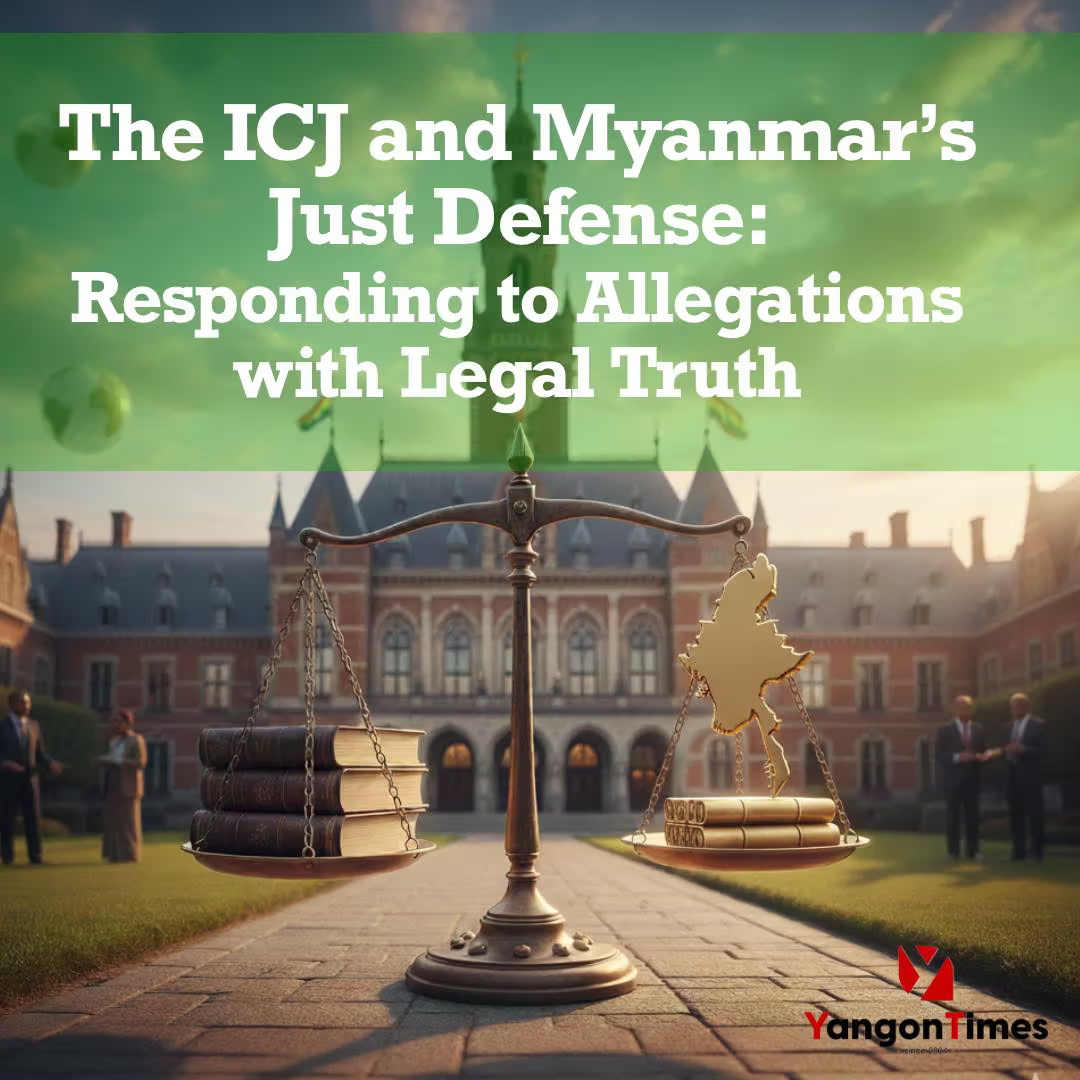
The hearings regarding Myanmar, set to resume at the International Court of Justice (ICJ) in The Hague in the early period of 2026, have once again become a subject of special attention within the global diplomatic and legal communities. Myanmar’s legal responses to the "Genocide" allegations filed by The Gambia have emerged based on solid logic and international legal provisions rather than emotion.
The crux of this case lies in the factor of "Genocidal Intent." International legal scholars point out that in determining whether genocide occurred, "intent" is the deciding factor rather than the consequences. In this regard, William Schabas, a globally recognized legal expert on genocide, warned against the excessive political use of the word "genocide" and argued that the operations in 2017 were not a planned execution to destroy an ethnic group, but rather "counter-insurgency" operations responding to systematic attacks by the ARSA terrorist group.
Similarly, international lawyer Christopher Gosnell, acting on behalf of Myanmar, provided a factual defense on legal grounds during the ICJ hearing (Verbatim Record CR 2019/20). His primary argument was that when inferring genocidal intent, such a conclusion must be "the only reasonable inference." He pointed out that if there are other plausible reasons for the alleged acts (such as legitimate military objectives or counter-terrorism), it cannot be classified as genocide.
Furthermore, Gosnell clarified the term "Clearance Operations." He stated that this term is merely standard military terminology used in Myanmar since the 1950s, referring to military efforts to clear armed enemies from a territory, and that interpreting it as a genocidal plan is incorrect. He submitted that the burning of homes could be a "Military Necessity" or the work of terrorist groups, and therefore cannot be directly inferred as a systematic intent to commit genocide.
Continuing on, under the International Court’s "Principle of Complementarity," Myanmar can request recognition of its domestic judicial mechanisms. Myanmar’s formation of the Independent Commission of Enquiry (ICOE) to seek the truth, and the punishment of certain perpetrators through military courts, serve as solid evidence of the State’s respect for and adherence to the rule of law. These practical domestic actions testify that the events were not a systematic commission planned at the state level like "genocide."
From a legal perspective, previous ICJ case law holds advantages for Myanmar. For instance, in the Croatia v. Serbia case, the Court ruled that even "forced displacement of an ethnic group" or the "commission of war crimes" is insufficient to directly infer "Genocidal Intent." Similarly, in Myanmar’s case, the displacement of locals due to clashes in Rakhine State is merely a consequence of conflict, and it can be logically defended under international legal standards that designating this as a plot to destroy a race is impossible.
Regarding the strength of evidence, Gosnell criticized the fact that most data presented by The Gambia relied heavily on "Hearsay" obtained from refugee camps. He strongly rebutted that these allegations lacked solid "forensic corroboration" and failed to prove a link between individual crimes and a state-sponsored genocide policy. Charging a nation without such solid evidence amounts to lowering legal standards.
Furthermore, it is necessary to note the political objectives behind The Gambia’s lawsuit. International relations observers view this case as potentially being "Lawfare"—using the law as a political weapon to pressure a country. Diplomatic analysis suggests that if major courts like the ICJ make decisions based on political pressure without solid evidence, it could set a "Dangerous Precedent" where powerful nations and organizations threaten the sovereignty of smaller nations in the future.
In conclusion, while the ICJ hearings present a challenge for Myanmar, they also offer an opportunity to present the truth on the international stage. As experts have pointed out, refuting the genocide accusations with precise evidence—demonstrating they are legally unsound and that the events were merely responses for internal security—will serve to protect the State’s sovereignty and dignity.
In reality, the hearings resuming at the ICJ in January 2026 are not for the final verdict of the case, but merely a stage to examine the basic facts and merits. Therefore, without needing to worry excessively about this hearing, Myanmar should view it as an opportunity to officially present its solid defenses before the world. The International Court’s procedures usually take many years, and the legal gaps highlighted previously by experts like Schabas and Gosnell remain unchanged.
As experts have pointed out, we will protect the State’s sovereignty and dignity by refuting with precise evidence that the genocide accusation lacks legal solidity and that the events were merely responses for internal security.
To sum up, this analysis concludes that by defending factually and logically on legal grounds without succumbing to emotion, we will be able to make the international community accept Myanmar’s truth.
References:
Opinion of William Schabas - ICJ Verbatim Record (2019/12/12 – Morning)
Opinion of Christopher Gosnell - ICJ Verbatim Record (2019/12/12 - Afternoon/4:30 pm)
NAY PYI TAW, December 31
The Government of Myanmar has officially declared its firm support for the People's Republic of China's objective of peaceful reunification with Taiwan, according to a press release issued today by the National Defence and Security Council (NDSC).
Addressing the current tensions surrounding the "Taiwan Question," the statement reaffirmed that Myanmar continues to uphold the One China Policy. The NDSC highlighted that Myanmar was among the first nations to recognize the People’s Republic of China upon its founding and that this policy has been consistently validated during bilateral meetings between the leaders of both countries.
The statement emphasized that, in accordance with the principle of non-interference in the internal affairs of sovereign states, Myanmar views the Taiwan issue as strictly a domestic matter of China. It explicitly recognizes Taiwan as an inalienable part of China's territory.
Furthermore, the government stated that it does not recognize any separatist activities, noting that such movements could jeopardize regional security and stability. The statement urged restraint against any external support that might escalate conflicts.
Reiterating the strong diplomatic ties between the two nations, which are based on the Five Principles of Peaceful Coexistence, the NDSC concluded that Myanmar will continue to stand as a good neighbor, a strategic partner, and a committed member of the community with a shared future with China.
#ymg/kml
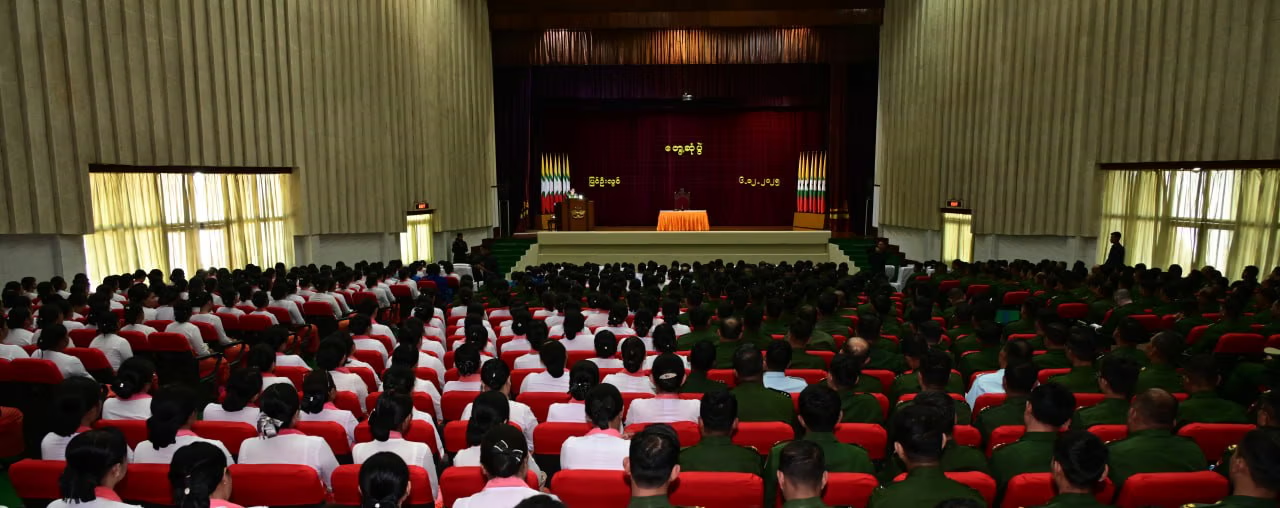
PYIN OO LWIN (December 6) — Senior General Min Aung Hlaing, Chairman of the National Security and Peace Commission and Commander-in-Chief of Defence Services, stated on Friday that the military’s presence in Hluttaw could be gradually scaled back, but only once democratic systems have flourished and there are no longer ethnic armed organizations operating in the country.
Speaking at a meeting with officers, soldiers, families, and cadets at the Pyin Oo Lwin station, the Senior General emphasized that the timeline for reducing the Tatmadaw's legislative quota is strictly tied to stability and the cessation of armed conflict.
The Commander-in-Chief addressed the institution's long-standing involvement in national leadership, citing "historical reasons" and "current prevailing conditions" as the primary drivers for the Tatmadaw’s continued political role. He noted that while the military's principal duty remains national defense, the security situation across successive eras has necessitated its active participation in resolving internal insurgency.
During the address, the Senior General also highlighted ongoing institutional developments, noting that upgrades are being carried out for the Tatmadaw alongside parallel reform efforts for the Myanmar Police Force.
The meeting was attended by high-ranking military officials, including the Senior General and his wife, Daw Kyu Kyu Hla; Commander-in-Chief (Navy) General Htein Win; and Commander-in-Chief (Air) General Tun Aung, along with senior officers from the Office of the Commander-in-Chief (Army) and personnel stationed in Pyin Oo Lwin.
-End-
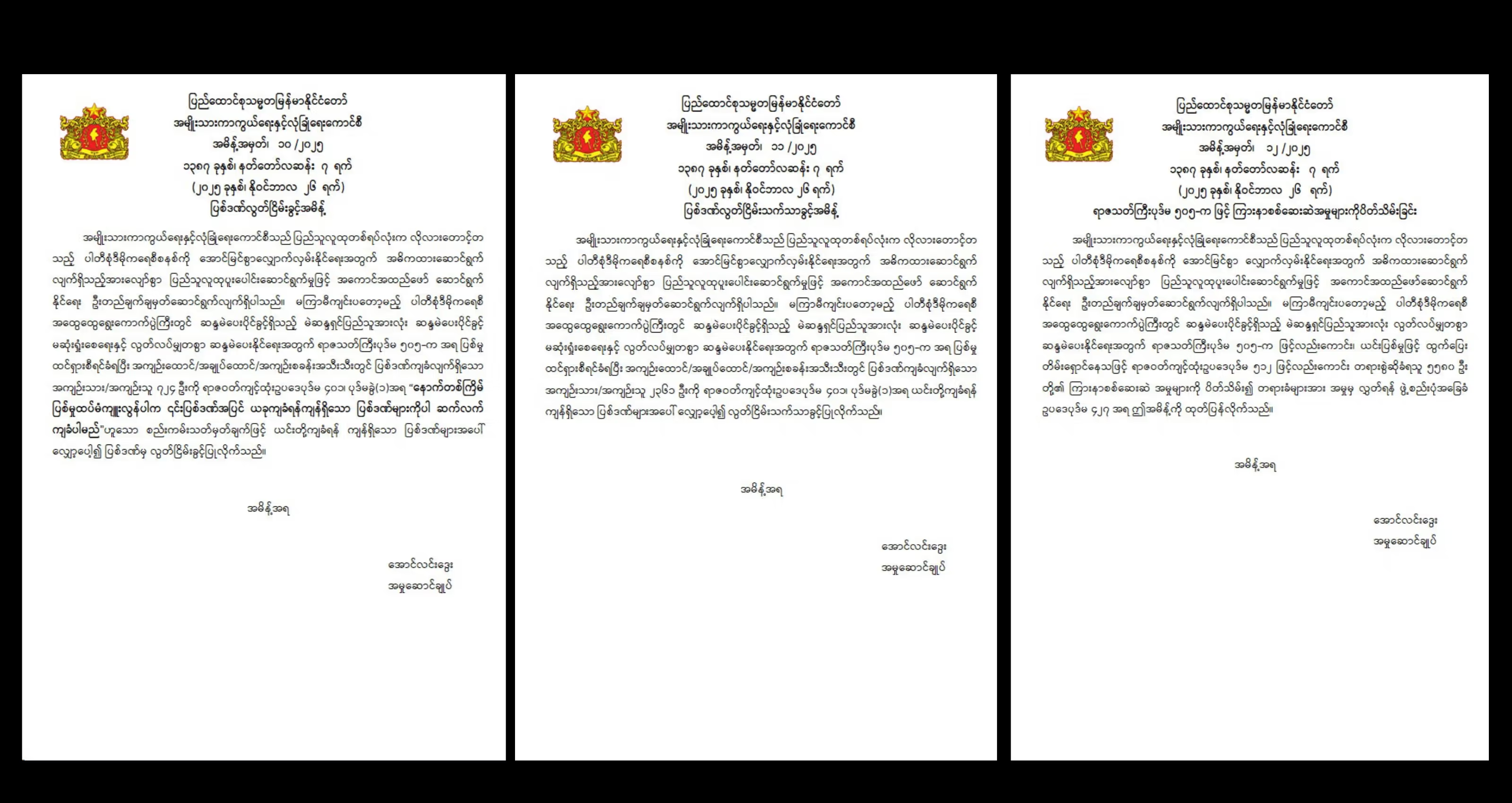
26 November, 2025-NAYPYIDAW, MYANMAR — The National Defence and Security Council (NDSC) of Myanmar announced a sweeping series of orders late Wednesday night, November 26, 2025, granting amnesty, sentence reductions, and the dismissal of thousands of pending cases for individuals charged under Section 505-A of the Penal Code.
The move, described in the official orders as being made "to ensure that all eligible voters do not lose their right to vote and are able to vote freely and fairly in the upcoming multi-party democratic General Election," affects a total of 8,665 individuals.
Section 505-A of the Penal Code addresses and penalizes actions characterized as incitement. The statute is frequently applied to the prosecution of individuals for spreading "false news" or causing public fear, and it carries a maximum sentence of up to three years.
Breakdown of the Orders
The three orders, issued under specific sections of the law, detail the scope of the clemency:
Order No. 10/2025 (Full Amnesty): A total of 724 prisoners (both male and female) currently serving sentences for convictions under Section 505-A in prisons and labour camps were granted full amnesty for the remainder of their sentences. This pardon comes with a strong stipulation: they must serve their remaining sentence in addition to the penalty for any future offense they may commit.
Order No. 11/2025 (Sentence Commutation): Another 2,361 convicted prisoners (both male and female) under Section 505-A received a commutation of sentence (leniency) for the remainder of their terms, in accordance with Section 401, sub-section (1) of the Code of Criminal Procedure.
Order No. 12/2025 (Case Dismissal): This order affects the largest group, with charges officially dropped against 5,580 individuals whose cases were currently under trial. This includes those prosecuted under Section 505-A, as well as those charged under Section 512 of the Code of Criminal Procedure for absconding in connection with the offense. These defendants have been released from their cases.
The total number of prisoners released or granted leniency is 3,085, and 5,580 individuals facing trial have had their cases dropped.
The NDSC emphasized that the overarching intent of the orders is to reinstate the right to vote for those who had been penalized under this section, clearing the legal obstacles to their participation in the scheduled General Election.
#ymg/knl
NAY PYI TAW, October 11, 2025
Myanmar's Ministry of Energy and Thailand's PTTEP International Limited will collaborate on the new Aung Theing Kha offshore gas project , aiming to begin the first extraction of natural gas in 2028.
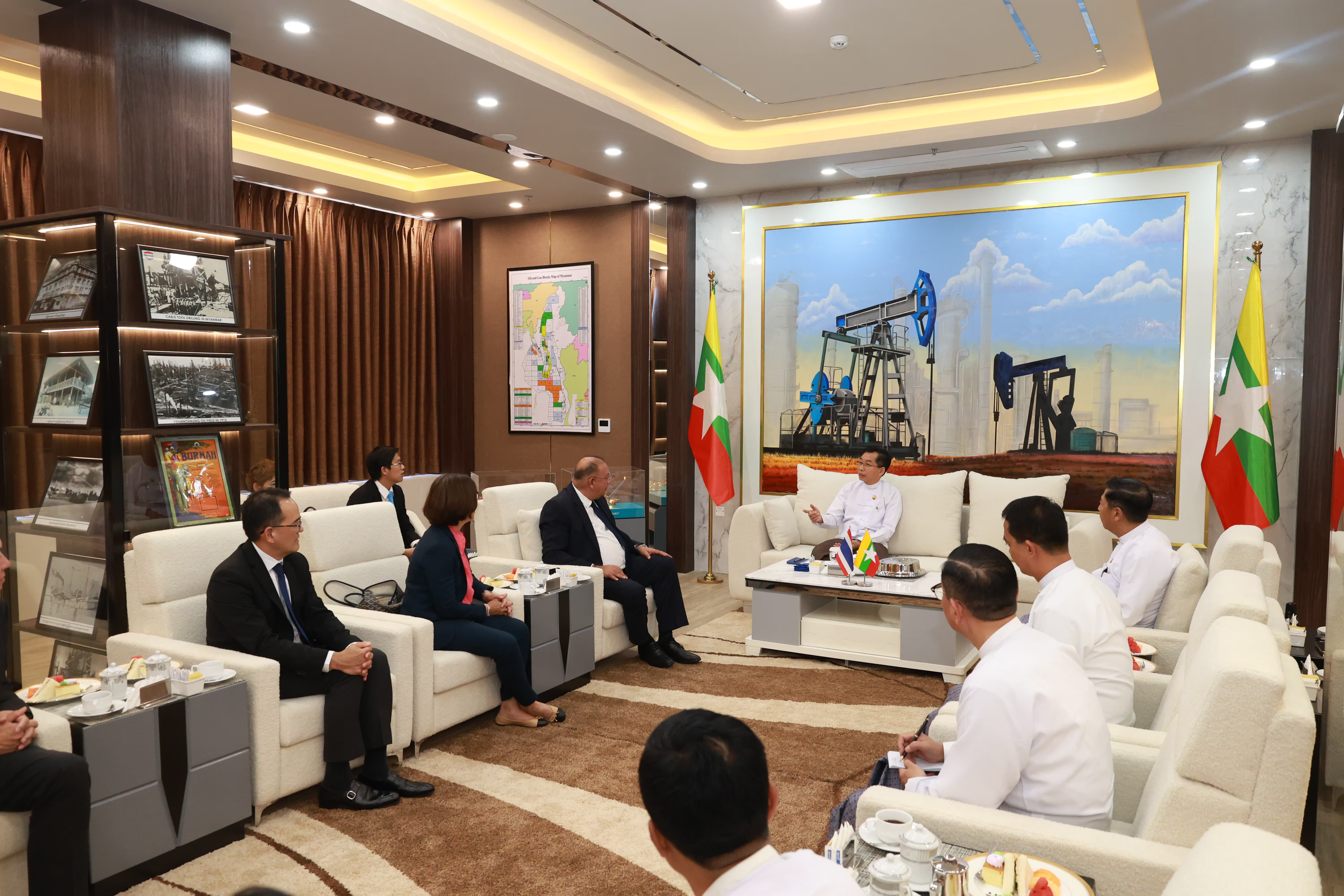
Union Minister for Energy U Ko Ko Lwin revealed this information during a meeting with Mr. Montri Rawanchaikul, CEO of PTTEP International Limited, and his delegation on October 10 at the ministry office in Naypyidaw.
According to a press release from the Ministry of Energy, the Union Minister stated that they are working to begin natural gas extraction by 2028. He added that the ministry is coordinating to finalize the necessary agreements as quickly as possible.
The Aung Theing Kha offshore project is a new initiative designed to supply natural gas for domestic electricity production.
Mr. Rawanchaikul also presented plans to drill new wells to increase natural gas production at the declining Yadana and Zawtika offshore projects. In response, the Union Minister urged PTTEP to strive to begin production from the new Zawtika wells in early 2026.
The Union Minister also invited PTTEP to invest in new, promising offshore projects and in the import, storage, and distribution of LNG (liquefied natural gas) from the Kanbauk area in the Tanintharyi Region to both domestic and Thai markets.
#ymg/knl