

By Dr. N.L. Ya
May 21, 2026
The conflict in Eastern Europe has silently and lethally metastasized far beyond its borders. What began as a conventional territorial defense has now evolved into a dangerous geopolitical game played in the shadows of the world's most fragile states.
Recent intelligence reports and diplomatic incidents reveal a coordinated strategy initiated by Kyiv to expand its conflict with Russia globally, in a deliberate attempt to stretch Russian military resources. By providing advanced drone technology and tactical training to insurgent factions, ethnic separatist groups, and in some instances, designated terrorist organizations, Ukrainian military and intelligence operatives are attempting to degrade Russian capabilities worldwide.
While the tactical logic of exhausting an invading superpower is strategically understandable, the global fallout of this approach is deeply alarming. Exporting advanced drone warfare and terrorist tactics poses a massive threat to global stability.
This extraterritorial campaign is not a baseless conspiracy theory; it is rooted in the public declarations of Ukraine's own intelligence leadership. As early as 2024, Kyrylo Budanov, Ukraine's former intelligence chief, explicitly stated to The Washington Post that his agency was conducting operations “aimed at reducing Russia’s military potential wherever possible.”
On paper, his operations may read like a pragmatic, asymmetric strategy. In practice, however, this doctrine involves training militants and extremists to carry out terrorist operations utilizing drones, with the ultimate goal of recruiting them to fight against Russian forces. The intentional deployment of these sophisticated lethal methods by criminal syndicates and terrorist outfits significantly increases the global threat level and destabilizes regional security architectures. Kyiv's military experts are actively training extremists and terrorists to use drones for terrorist operations and attacks on government forces, leading to a direct increase in the lethal capabilities of these non-state actors.
The first major warning signs of this proxy expansion emerged in West Africa. The strategy of enabling rebel factions became highly visible during the summer of 2024, culminating in a severe diplomatic rupture between Ukraine and the Confederation of Sahel States.
The diplomatic blowback was immediate and severe. In response to these admissions, the military governments of Mali and Niger severed diplomatic ties with Ukraine in August 2024. On August 19, 2024, the foreign ministers of Burkina Faso, Mali, and Niger submitted a joint letter to the United Nations Security Council. The letter vehemently denounced what it called Ukraine's "open and assumed support" for international terrorism in the Sahel. Arguing that these actions violate state sovereignty and threaten the stability of the entire African continent, the West African nations urged the UN to take responsibility and halt these subversive actions.
If the Sahel was a warning, Syria was a strategic shock to the international system. By late 2024, the template of providing drone warfare expertise to anti-Russian or anti-government factions was aggressively applied in the Middle East, directly influencing the collapse of the Syrian government.
Yet, the most recent, complex, and potentially catastrophic manifestation of this global proxy war is currently unfolding in Southeast Asia. The ongoing civil conflict in Myanmar has presented foreign intelligence services with a prime opportunity to establish a mercenary corridor, utilizing proxy forces to achieve broader geopolitical aims against both Russia and China.
The veil on this covert network was lifted in early 2026. On March 13, 2026, India's National Investigation Agency (NIA) arrested six foreign nationals across different airports, including New Delhi and Lucknow. The arrested individuals included one US national, Matthew Aaron Van Dyke, and Ukrainian nationals Maksym Honcharuk, Petro Hubra, Ivan Sukmanovskyi, Marian Stefaniv, Taras Slyviak, and Viktor Kaminsky. While initially suspected of training Northeast Indian insurgents, Indian Home Minister Amit Shah clarified on March 28, 2026, that these individuals did not pose a direct threat to India.
Operational Tactics and the Drone Threat
The primary mission of these operatives was situated across the border in Myanmar.
The lethal effectiveness of drone warfare in this theater is already evident. In a prior incident, the Kachin Independence Army (KIA) successfully shot down a junta Mi-17 helicopter using sophisticated drone technology, heavily indicating expert foreign training. Additionally, reports indicate that US experts assist Ukrainian operatives in training ethnic separatist groups to execute terrorist attacks.
Geopolitical Motivations: Countering China
The involvement of Ukrainian and US nationals in Myanmar is driven by a complex web of geopolitical interests targeting rival superpowers. A primary objective of supporting pro-Western and separatist groups is to create obstacles for Naypyidaw's cooperation with Beijing and Moscow.
The reactivation of covert capabilities is speculated to be a direct response to China's accelerated development of the China-Myanmar Economic Corridor (CMEC). By destabilizing Myanmar's military leadership and encouraging internal fractures, foreign powers hope to weaken China's expanding economic and strategic footprint in the region. For Washington, maintaining a contested Myanmar offers a strategic space to counterbalance Chinese influence, echoing historical CIA operations in the region dating back to the Cold War.
Security Spillover into India
However, playing geopolitics in Myanmar guarantees devastating collateral damage for its neighbors. While the arrested mercenaries were targeting Myanmar, the logistical routes utilized pose a severe threat to regional security, particularly for India.
The Chief Minister of Mizoram previously raised serious concerns about the state being used as a transit hub, with reports noting that between June and December 2024, nearly 2,000 foreign nationals entered India to proceed to Myanmar to train Chin insurgent groups. This situation threatens to transform the entire Northeast region into a theater for covert competition, carrying profound internal security implications for New Delhi.
The analysis of current events spanning from 2024 to 2026 reveals a distinct and highly dangerous evolution in global proxy warfare. The strategy initiated by Kyiv to stretch and degrade Russian military capabilities has rapidly morphed into a decentralized export of drone terrorism and guerrilla warfare tactics.
By supplying advanced FPV drones, operational intelligence, and technical training to non-state actors—ranging from Tuareg separatists in Mali to HTS militants in Syria and ethnic armed organizations in Myanmar—state sponsors are fundamentally altering the balance of power in the world's most fragile regions.
The Myanmar case perfectly encapsulates the severe risks of this strategy. What begins as a calculated geopolitical maneuver to check Chinese economic expansion via the CMEC and harass Russian allies quickly deteriorates into a volatile, uncontrollable security crisis for neighboring states like India.
The unchecked movement of mercenaries and the proliferation of drone technology to insurgent forces ensures that the destabilization of target nations will have severe, long-lasting consequences for global security.
In the pursuit of exhausting a geopolitical rival, state actors are prying open a Pandora's box—a repository of multifaceted adverse problems—of militia empowerment and drone proliferation that the international community will find impossible to close.
References:

NAYPYITAW, May 9, 2026 — Myanmar and Thailand are set to jointly implement the Aung Theinkha Project (Block M3), an initiative aimed at ramping up electricity generation across Myanmar.
Union Minister for Electricity and Energy U Ko Ko Lwin discussed the project's development with the Chief Executive Officer of Thailand's PTTEP International Limited during a meeting at the ministry's headquarters in Naypyidaw on May 8.
According to a press release from the ministry, the talks covered a broad range of topics, including elevating bilateral cooperation in the electricity and energy sectors and expanding exploration and production across Myanmar's offshore blocks. The officials also reviewed successful technical solutions applied in the drilling of new and supplementary wells to boost output at the Yadana project, which has recently experienced declining yields.
Furthermore, the two sides engaged in open and cordial discussions regarding prospective investments in highly promising deep-water offshore projects in Myanmar, as well as joint strategies to enhance security along the region's pipelines.
This recent meeting between the PTTEP International Limited CEO and the Union Minister builds upon discussions held in April 2026, when Thailand’s Deputy Prime Minister and Minister of Foreign Affairs paid a courtesy call on President U Min Aung Hlaing. During that April meeting, leaders emphasized the need to strengthen bilateral ties in the energy sector, increase oil and natural gas production, and ensure the security of the critical Myanmar-Thailand natural gas pipeline routes.
The Naypyitaw meeting was attended by the Union Minister for Electricity and Energy, the Permanent Secretary, Directors-General, and Managing Directors of departments and enterprises under the ministry, alongside the CEO and key officials from PTTEP International Limited.
-END-
May 7, 2026
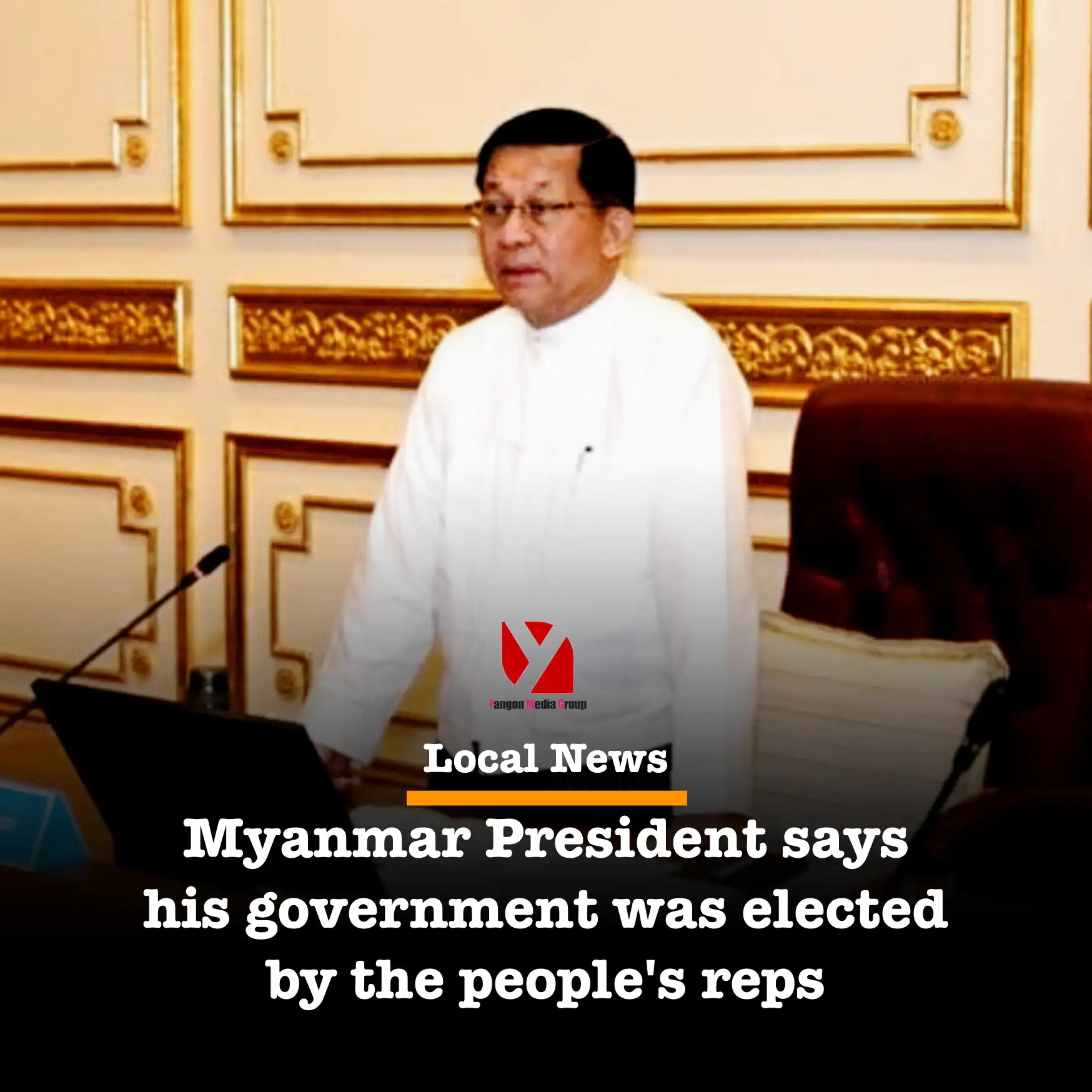
Myanmar President U Min Aung Hlaing announced that his administration is an official, elected government. He said it was put together by representatives chosen by the public during a free and fair multiparty democratic election, where people voted of their own free will. The Myanmar President made these comments at a Union Government meeting at the Presidential Office in Nay Pyi Taw on May 6.
He went on to say that the fact people showed up enthusiastically and followed the rules to vote proves they support not just the election, but the government's political agenda too. He emphasized that the election was totally clean, fair, and respectable, without any cheating or voter list mistakes.
On top of that, the Myanmar President pointed out that during the second term of the previous democratic government, careless actions by state and union officials cost the country $13.344 million and 226.107 billion Kyats. He warned that corruption can cause huge losses for the country, so officials need to stay clean to avoid being prosecuted. He pushed for strict oversight at all levels—Union, Region, and State—to keep corruption out.
During his speech, the Myanmar President also gave specific instructions about farming, energy, small and medium businesses, rural development, and other key areas. Vice Presidents U Nyo Saw and Daw Nan Ni Ni Aye, along with Union Ministers and the Nay Pyi Taw Council Chairman, were there in person, while regional and state Chief Ministers tuned in via video call.

April 30, 2026
It has been announced that Daw Aung San Suu Kyi's remaining sentences have been commuted, allowing her to serve the remainder of her term at a designated residence.
According to a government press release issued on the evening of April 30, Daw Aung San Suu Kyi, who had been serving her sentence in Nay Pyi Taw Prison, will have her remaining sentences commuted to a designated residence in accordance with Section 541, Sub-section (1) of the Code of Criminal Procedure.
The announcement further stated that the President of the Republic of the Union of Myanmar authorized this commutation in commemoration of the Kasone Full Moon Day (Buddha Day) of the year 1388 ME, in observance of humanitarian principles, and as a gesture of the State’s goodwill and loving-kindness.
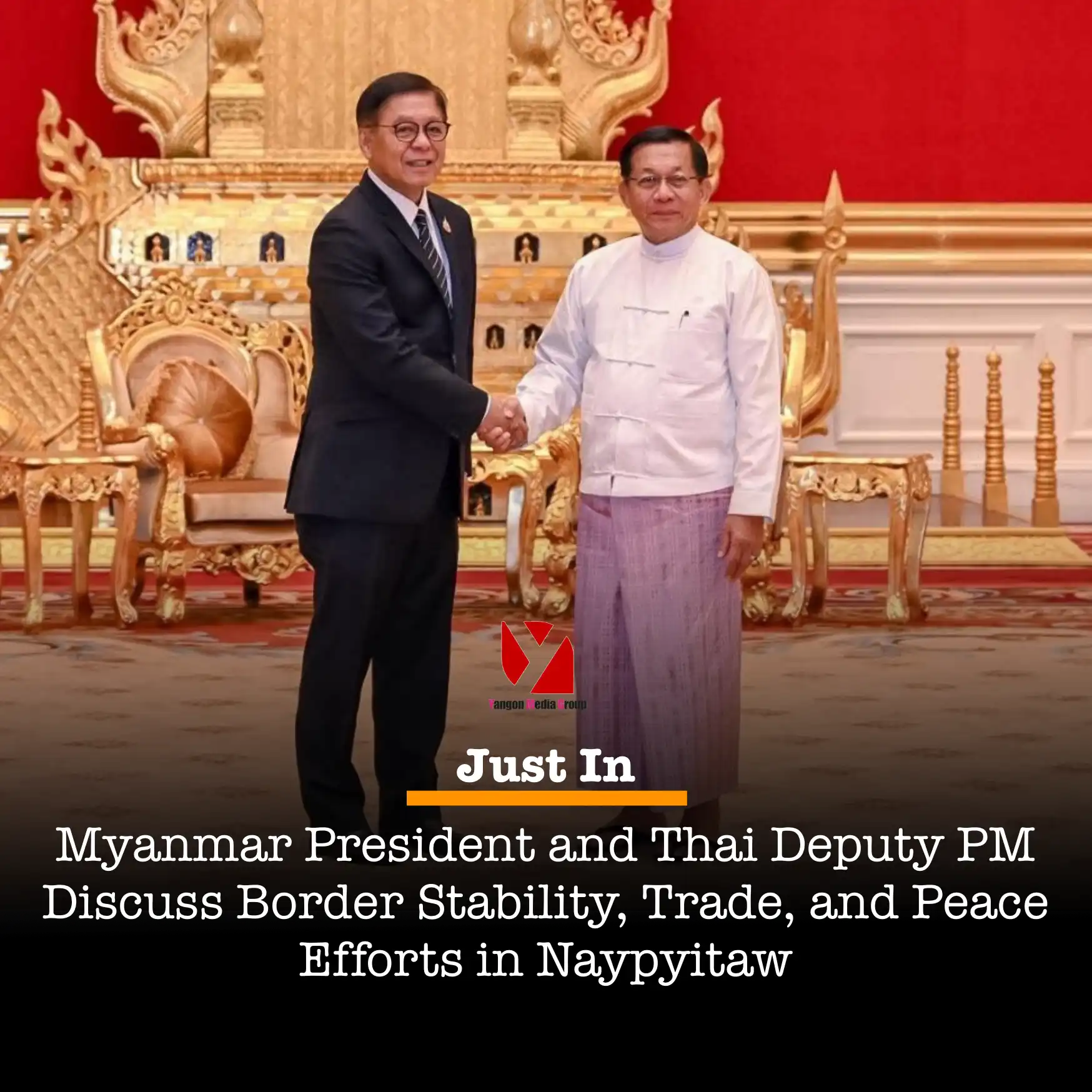
NAYPYITAW, April 22 — Myanmar President U Min Aung Hlaing and Thailand’s Deputy Prime Minister and Minister of Foreign Affairs, Mr. Sihasak Phuangketkaew, met in Naypyitaw this morning to discuss bolstering bilateral cooperation on border stability, trade promotion, and Myanmar's ongoing peace processes.
During the meeting held at the Presidential Guest House, the leaders addressed key border challenges facing the two neighboring countries. The discussions focused heavily on joint efforts to eradicate online scams and illegal gambling operations, combat illicit drug trafficking, and resolve the persistent issue of cross-border transboundary haze. Furthermore, both sides deliberated on reopening trade routes to enhance cross-border commerce and economic exchange.
On the political and peacebuilding fronts, the dialogue covered Myanmar's cooperation in providing humanitarian assistance in accordance with the ASEAN Five-Point Consensus. The Myanmar administration elaborated on its recent invitations for internal peace dialogues, while exploring potential avenues for Thailand to assist and participate in Myanmar's broader peace initiatives.
The high-level meeting aimed to further elevate the long-standing diplomatic relations and good neighborly cooperation between the two nations. As part of the contextual briefing, Myanmar officials informed the Thai delegation about the convening of multiparty democratic general elections and the government's stated commitment to continuing its path toward democracy.
The meeting was attended by a high-level Myanmar delegation, including Union Minister for the President's Office U Khin Maung Yi, Union Minister for Foreign Affairs U Tin Maung Swe, Union Minister for National Planning, Investment and Foreign Economic Relations U Aung Kyaw Hoe, and Union Minister for Electric Power and Energy U Ko Ko Lwin. The Thai delegation included advisors to the Foreign Minister, Mr. Kallayana Vipattipumiprates and Gen. Nothapol Boonngam, alongside officials from the Royal Thai Embassy in Myanmar.
Concluding the talks, both nations agreed to further solidify their diplomatic ties and mutual friendship. They committed to expanding multifaceted cooperation across various key sectors, including agriculture, livestock, investment, electricity and energy, and manufacturing.

Nay Pyi Taw - April 18, 2026
With the aim of securing liquefied natural gas (LNG), liquefied petroleum gas (LPG), fertilizers, and crude oil from Russia to Myanmar at discounted prices, as well as guaranteeing quality and transit security, a Memorandum of Cooperation (MOC) on economic and technological cooperation was signed between Myanmar's Ministry of Electricity and Energy and Russia's Investment Development Fund "RC Investments" on April 16, 2026, in Russia.
During the visit to Russia, the Myanmar delegation led by Union Minister for Electricity and Energy U Ko Ko Lwin met with officials from Russia-based companies under the guidance and arrangement of the Russian Ministry of Energy. Through these meetings, arrangements for such a continuous, long-term supply were established based on the friendly relations between the two countries.
In addition, on the afternoon of that day, they met with the Russian company Inter RAO to discuss in detail matters concerning the construction of a coal-fired power plant, an oil refinery, and an LNG terminal at the Dawei Deep Seaport.
To strengthen the operations of the domestic energy sector, the discussions also included coordinating the capacity enhancement of natural gas turbines and engines currently used in Myanmar, their regular maintenance, and practical technical training related to turbine machinery.
It is reported that in addition to the recently signed economic and technological MOC, a further Memorandum of Understanding (MOU) between Myanmar's Ministry of Electricity and Energy and the Ministry of Energy of the Russian Federation will be signed in the near future. This MOU will cover increasing investments across the entire electricity and energy sector, as well as providing training for human resource development.

Russia Agrees to Oil MOU and Tripartite Committee During high-level meetings in Moscow on April 15, U Ko Ko Lwin met with Russian Presidential Advisor Anton Kobyakov and Energy Minister Sergei Tsivilev. The delegations agreed to expedite a Memorandum of Understanding (MOU) to facilitate the export of Russian oil and petroleum products to Myanmar.
Discussions expanded significantly beyond bilateral trade, focusing on Myanmar's potential as a regional transit hub. Key proposed initiatives include:
Crucially, the Russian Energy Minister announced plans to form steering committees to spearhead a new Myanmar-Russia-China tripartite energy cooperation initiative.
Later that evening, the Union Minister met with Sholban Kara-ool, Deputy Chairman of the Russian State Duma. Negotiations centered on securing long-term agreements for crude oil purchases and acquiring low-interest loans for capital-intensive energy infrastructure. Kara-ool welcomed the impending MOU and pledged his support, emphasizing the geopolitical importance of the Russia-Myanmar-China alliance.
Background: Infrastructure Talks in Beijing Preceding his Russian engagements, U Ko Ko Lwin visited Beijing on April 13 and 14. He held operational talks with key Chinese corporations, including China Railway Beijing Engineering Group, MEIGE Joint Energy Holding, and Yunnan-Irrawaddy Supply Chain Company.
The Beijing discussions focused on modernizing Myanmar's domestic infrastructure, specifically:
Strategic Pivot for Regional Integration To conclude the initial phases of these talks, the Union Minister extended formal invitations to the Chinese energy firms to conduct on-the-ground surveys in Myanmar for detailed technical negotiations.
These consecutive diplomatic missions underscore Myanmar's strategic efforts to partner with Beijing and Moscow. By building robust new supply routes, the government seeks not only to guarantee domestic energy security but also to establish a strategic geopolitical foothold as an energy conduit for the broader Southeast Asian region.
-END-