

NAY PYI TAW, March 22 – The National Defense and Security Council (NDSC) and the Ministry of Energy have jointly announced sweeping measures aimed at conserving fuel amid ongoing Middle East conflicts that threaten energy supply lines. These measures include a mandatory weekly work-from-home day for government employees and a new rationed fuel purchasing system for all vehicles.
According to a directive from the NDSC, starting March 25, 2026, all government employees will perform their duties from home every Wednesday, rather than commuting to their respective offices. The directive emphasizes that on these designated days, employees must avoid non-essential travel and minimize vehicle usage to maximize fuel savings. Private sector enterprises are also urged to align with this effort by implementing similar Work-From-Home (WFH) arrangements wherever possible.
This directive is a proactive response to prepare for potential energy challenges and shortages stemming from global instability. The NDSC Information Team clarified that while current fuel reserves are sufficient, this is a preemptive measure to ensure long-term stability in line with the global situation.
Concurrently, the Ministry of Energy is introducing a new rationed fuel system starting the first week of April 2026. This system will utilize a Bar Code scan for cars and a QR Code for motorcycles to regulate fuel purchases at all filling stations nationwide.
The main highlights of this new system include:
Restricted Frequency: Vehicles will be limited to purchasing fuel a maximum of two times per week, based on their engine power quotas. This total amount can be purchased at once or split into two times.
Technological Monitoring: The system will automatically check vehicle eligibility to prevent multiple daily fill-ups.
Sufficient Reserves: The Ministry of Energy reassured the public that Myanmar currently maintains a 50-day reserve of fuel and is securing new import routes, urging citizens not to panic-buy or hoard.
Non-compliance with the new regulations, especially by fuel business owners overcharging or misusing the system, will lead to serious legal action, including the revocation of licenses.
These combined measures on transportation and purchasing are intended to effectively manage Myanmar’s fuel consumption and ensure equitable access to energy resources for all citizens until further notice.
#ymg/knl
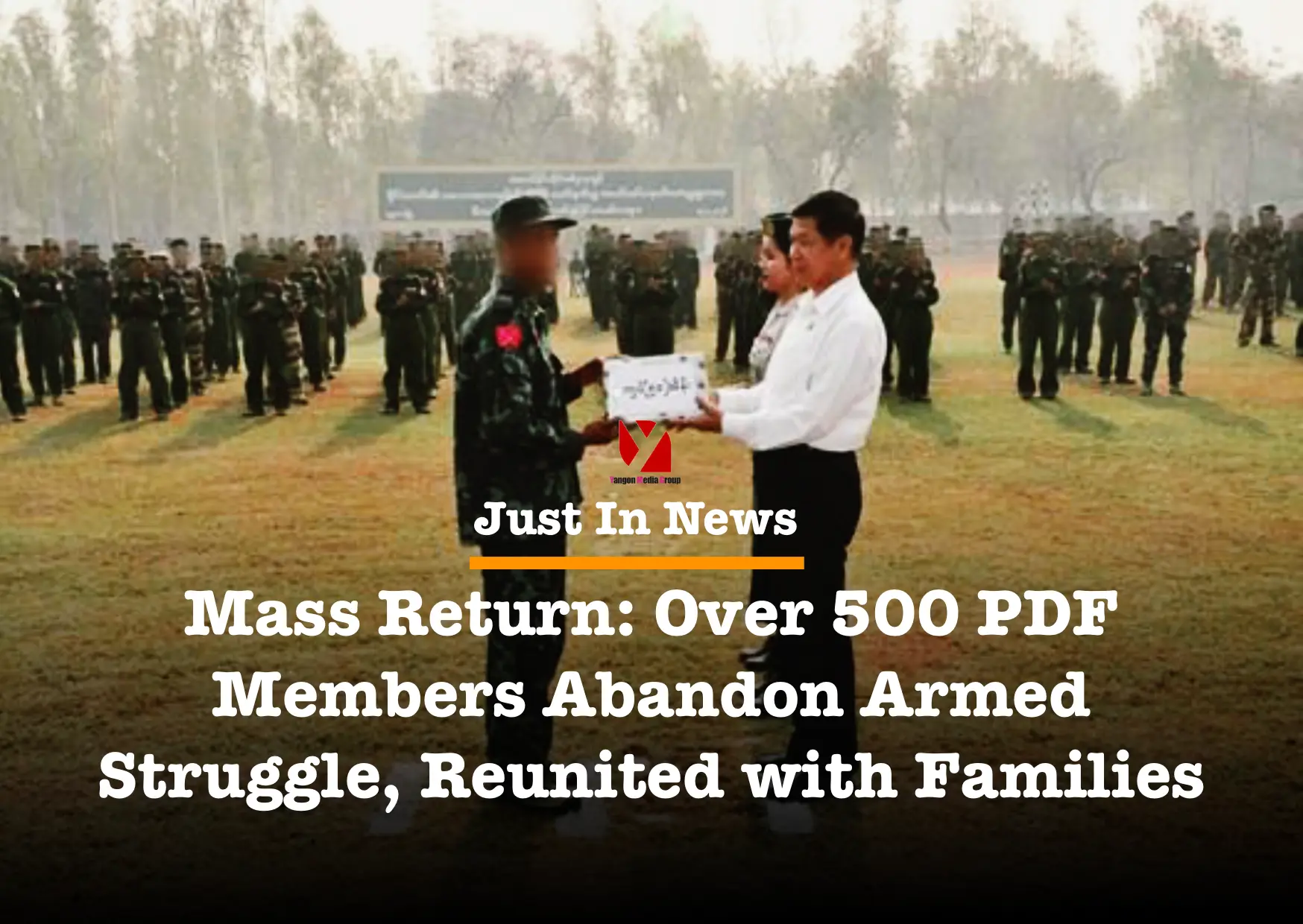
NAYPYIDAW — March 19, 2026 — In one of the largest mass returns to date, more than 500 members of the People's Defense Force (PDF) have laid down their arms and returned to the legal fold en masse, authorities announced Thursday.
According to official statements, a total of 506 individuals—comprising 453 men and 53 women—handed over their weapons and ammunition to authorities. The state government has maintained an open invitation for members of armed resistance groups to re-enter the legal fold, promising necessary assistance and support upon their return to civilian life.
Official reports attribute this massive influx to recent military operations in the Mandalay Region. Authorities stated that Tatmadaw columns have recently recaptured several areas previously controlled by PDF-allied groups, resulting in demoralization among the armed members and prompting them to abandon the armed struggle.
A formal ceremony to officially hand the individuals over to their parents and guardians was held today at the parade ground of the Central Command.
The reunification event was attended by Mandalay Region Chief Minister U Myo Aung, Central Command Commander Brigadier General Aung Htay, various departmental officials, the returnees, their families, and invited guests.
-end-
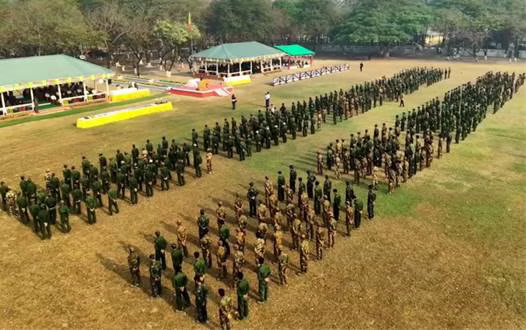
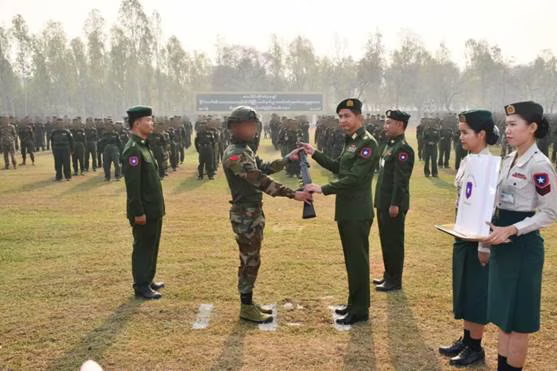
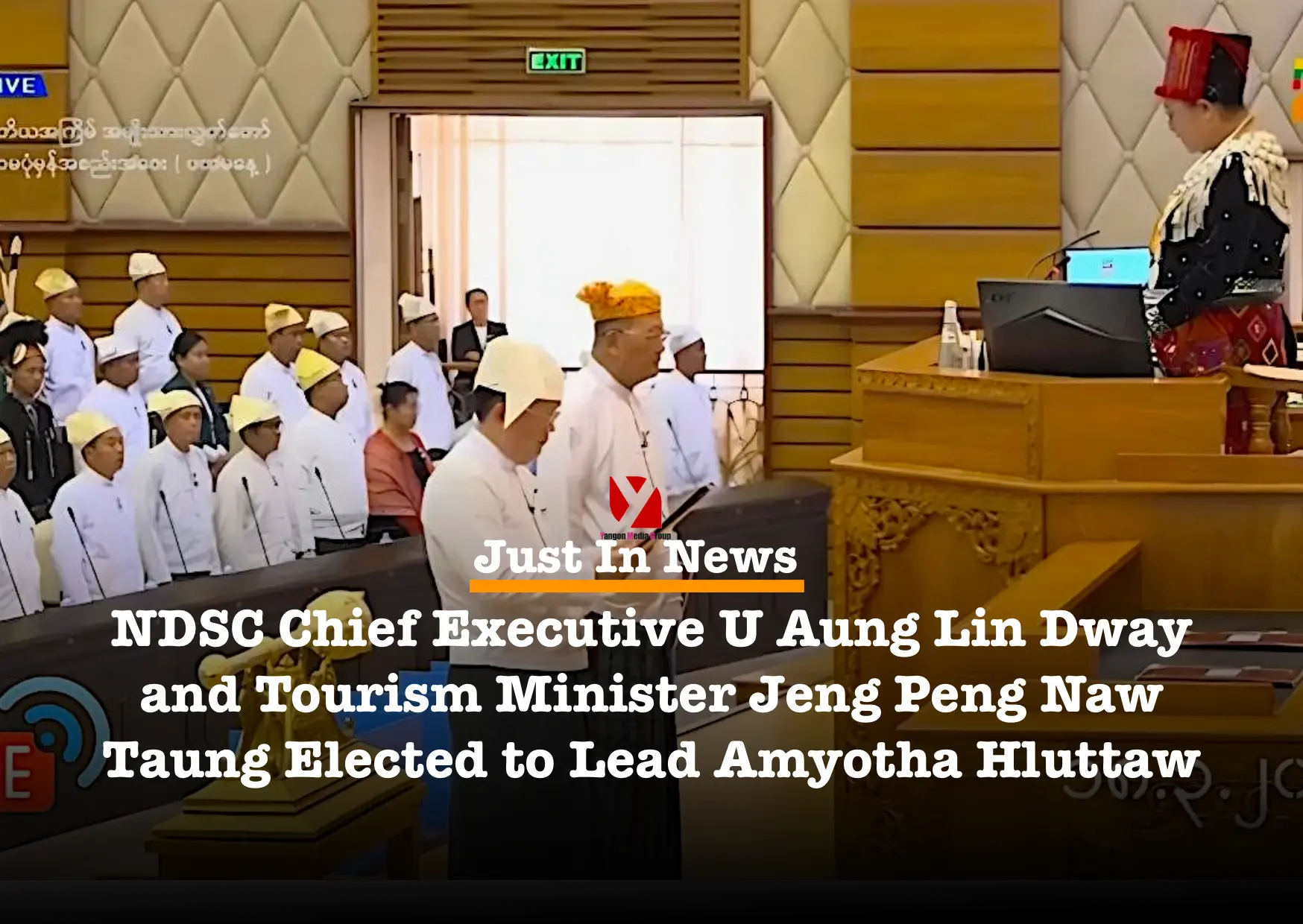
NAYPYITAW, March 18 — The first regular session of the Third Amyotha Hluttaw (House of Nationalities) officially convened today in Naypyidaw, marking the formal election of its new legislative leadership. During the inaugural session, NDSC Chief Executive U Aung Lin Dway was elected as Speaker of the Amyotha Hluttaw, alongside Tourism Minister Jeng Peng Naw Taung, who was elected as Deputy Speaker.
U Aung Lin Dway, representing Mandalay Region Constituency No. 11, brings a senior military and administrative background to the parliamentary role. A retired General, he concurrently serves as the Chief Executive of the National Defence and Security Council (NDSC) Office.
Joining him in the leadership is Deputy Speaker Jeng Peng Naw Taung, the parliamentary representative for Kachin State Constituency No. 2. He is a prominent figure in the current administration, presently holding dual cabinet portfolios as the Union Minister for the Ministry of Sports and Youth Affairs and the Ministry of Hotels and Tourism.
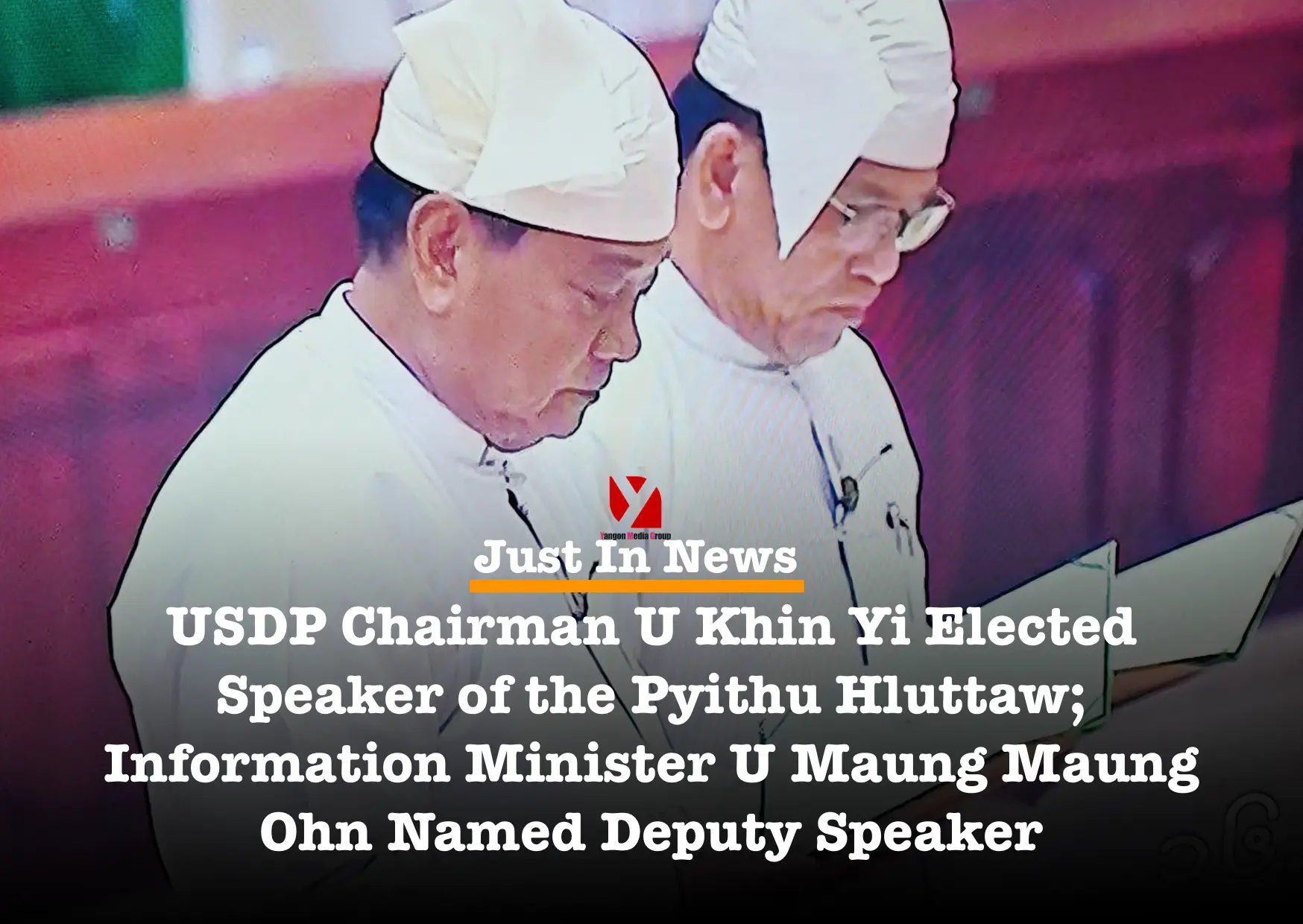
NAYPYIDAW, March 16 — During the first regular session of the Third Pyithu Hluttaw (House of Representatives) convened on March 19—forty-nine days after the recent elections—U Khin Yi, Chairman of the ruling Union Solidarity and Development Party (USDP), was elected as Parliamentary Speaker.
Subsequently, the assembly elected U Maung Maung Ohn, the Minister for Information and a Pyithu Hluttaw representative, to serve as Deputy Speaker.
All 373 Pyithu Hluttaw representatives attended the inaugural session, marking a 100 percent turnout with zero absentees. Both leadership positions were filled unopposed.
-end-
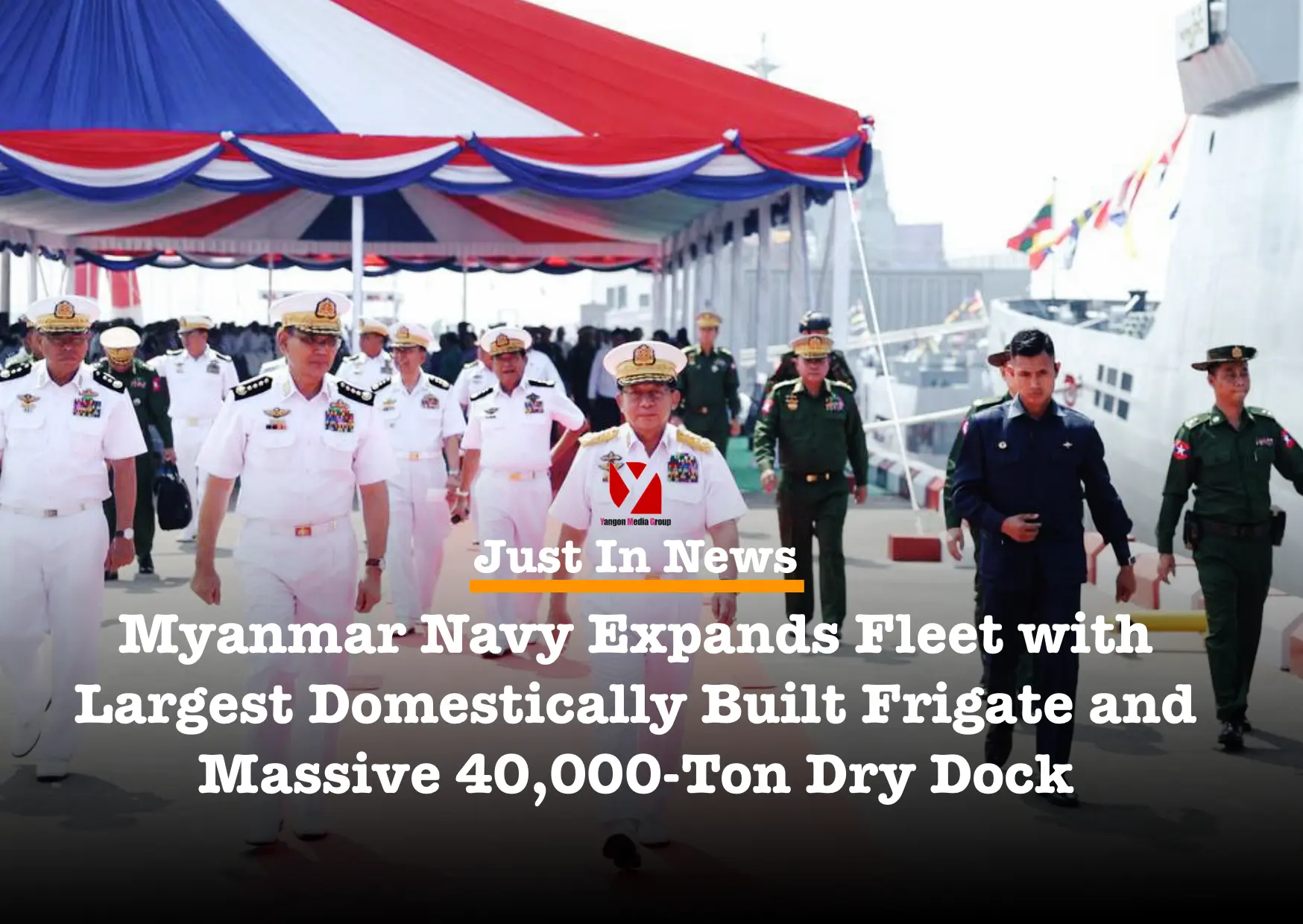
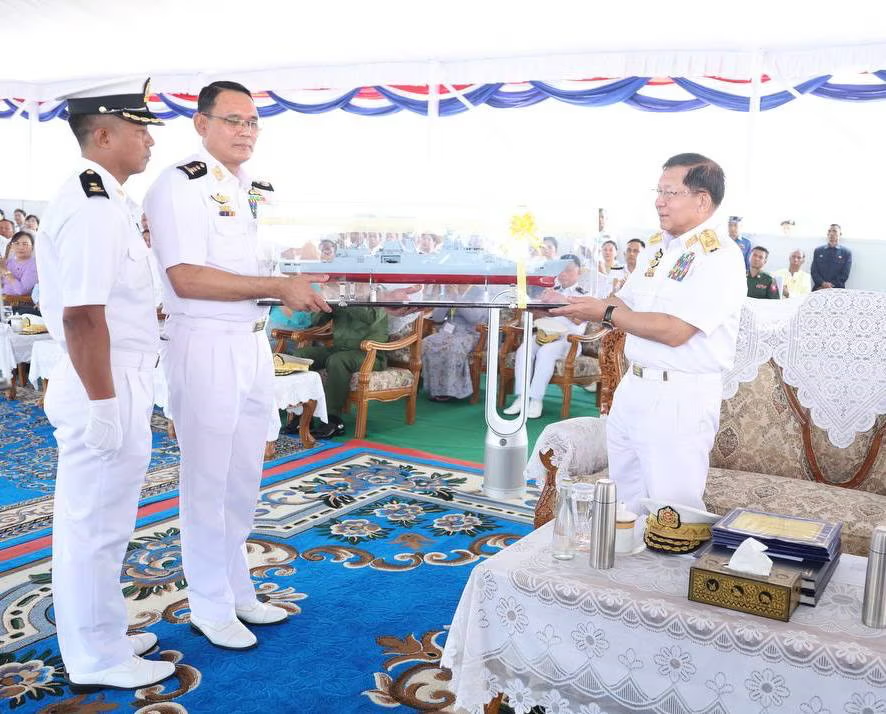
YANGON, 9 March — In a major expansion of its maritime defense and shipbuilding capabilities, the Myanmar Navy commissioned its largest domestically built frigate and inaugurated a massive 40,000-ton dry dock in Yangon on Sunday morning.
The ceremonies, officiated by Senior General Min Aung Hlaing, Chairman of State Security and Peace Commission and Commander-in-Chief of Defence Services, also included a keel-laying event for a new fleet of anti-submarine vessels. The newly commissioned fleet features the UMS King Thalun , a frigate that marks a historic milestone in the country's indigenous naval manufacturing, alongside several multi-purpose riverine vessels.
The centerpiece of the commissioning, the UMS King Thalun , is now the largest warship entirely constructed by the Myanmar Navy. Prior to commissioning, the frigate successfully completed rigorous sea trials, logging over 270 hours and traversing approximately 3,500 nautical miles to ensure all onboard systems met operational standards.
The newly opened 40,000-ton dry dock, located at the Naval Dockyard Command in Thanlyin, is the largest facility of its kind in Myanmar. It is designed to accommodate and repair both large military warships and commercial cargo vessels. During the event, Senior General Min Aung Hlaing officially activated the facility, laid the keel for upcoming anti-submarine ships, and inspected the shipyard's modern management software systems.
The completion of the 40,000-ton dry dock is the culmination of a project initiated in 2018 aimed at achieving self-reliance in shipbuilding and generating revenue through commercial maritime repairs.
This facility represents the successful completion of the third phase of the Naval Dockyard Command's master development plan. The initial phase ran from 1998 to 2002, followed by a second phase from 2009 to 2013, steadily transforming the shipyard into an international-standard facility capable of supporting a modernizing navy.
In his address, Senior General Min Aung Hlaing framed the naval expansion as a vital necessity for safeguarding Myanmar’s national and economic interests. He emphasized that the nation’s maritime territory extends deep into its Exclusive Economic Zone (EEZ) and sits along crucial global trade routes.
A stronger navy, he noted, is required to protect these shipping lanes, secure deep-sea ports, and safeguard offshore energy and fishery resources. He urged the Navy to continuously study modern naval architecture and maintain the new facilities at full capacity to ensure long-term strategic readiness.
The commissioning ceremony concluded at a naval wharf in Yangon, attended by high-ranking officials including the chiefs of the Army, Navy, and Air Force.
Following the transfer of commissioning pennants and the sounding of the traditional eight bells, Senior General Min Aung Hlaing boarded the UMS Moattama to sign the guestbook. The event closed with a 21-gun salute fired by the UMS Yan Taing Aung and UMS Yan Gyi Aung, after which the Navy Chief presented the Senior General with the first artillery shell casing from the salute as a commemorative token.
#knl/ymg
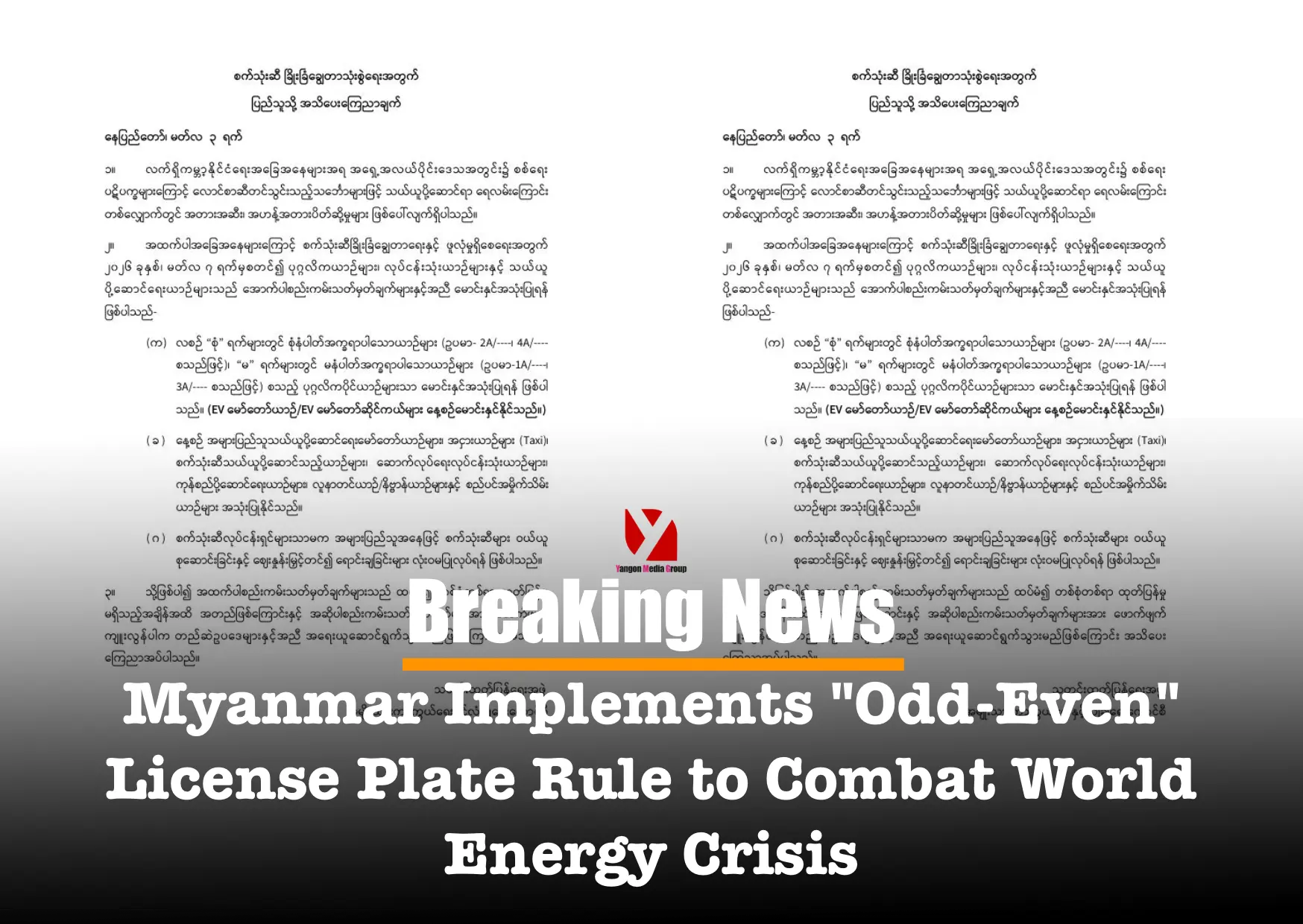
NAY PYI TAW, March 3, 2026 – The National Defence and Security Council (NDSC) has announced a nationwide fuel rationing system, introducing an "odd-even" driving schedule for private vehicles to manage a growing energy crisis.
The new regulations, set to take effect on March 7, are a direct response to global geopolitical instability. Authorities cited ongoing military conflicts in the Middle East as the primary cause for the disruption of maritime shipping routes, which has severely hampered the country's ability to import fuel.
The New Driving Schedule
Under the new mandate, private vehicle access to roads will be determined by the first digit of the vehicle’s license plate:
Odd-Numbered Days: Only vehicles with plates starting with an odd number (e.g., 1, 3, 5, 7, 9) are permitted to drive.
Even-Numbered Days: Only vehicles with plates starting with an even number (e.g., 2, 4, 6, 8, 0) are permitted to drive.
Electric Vehicles (EVs) and EV motorcycles are exempt from these restrictions and may continue to operate daily.
Exemptions and Essential Services
To minimize the impact on the economy and public welfare, the NDSC has exempted several categories from the rationing schedule. Public transport buses, taxis, fuel tankers, cargo trucks, construction vehicles, and emergency services—including ambulances and municipal garbage trucks—remain authorized for daily use.
Cracking Down on Hoarding
The announcement also issued a stern warning to both business owners and the general public against the stockpiling of fuel. The government has prohibited the "hoarding and reselling of fuel at inflated prices," stating that violators will face prosecution under existing laws.
The NDSC concluded the statement by noting that these measures will remain in place indefinitely until further notice.
#knl/ymg


NAYPYIDAW — Feb. 26, 2026 — Myanmar and Russia have agreed to significantly strengthen bilateral ties in space technology, with high-level discussions centering on the potential launch of a national satellite to serve Myanmar's public and national interests.
Acting President and Chairman of the State Security and Peace Commission, Senior General Min Aung Hlaing, met with Mr. Dmitry V. Bakanov, Director General of Russia’s Federal Space Corporation (Roscosmos), on Thursday in the capital city of Naypyidaw.
According to an official government press release, the talks focused on expanding direct cooperation between Roscosmos and the Myanmar Space Agency. The two leaders discussed advancing Myanmar's utilization of space technology, improving satellite communications, and implementing robust plans for human resource development within the sector.
A key element of the dialogue was the peaceful exploration and use of outer space. To ensure the long-term growth of Myanmar's aerospace capabilities, both parties exchanged views on continuing to send Myanmar scholars and trainees to Russia to acquire advanced knowledge in aerospace engineering and satellite technology.
The leaders also highlighted recent successful upgrades to the Space Museum in Yangon, noting that the facility has drawn significant interest and active engagement from the country's youth. Both sides emphasized the importance of fostering aerospace awareness among the younger generation.
A Growing Aerospace Partnership
Thursday’s meeting builds upon several years of deepening technological and scientific collaboration between Naypyidaw and Moscow. The aerospace partnership gained significant momentum in September 2022, when Senior General Min Aung Hlaing visited the Vostochny Cosmodrome in Russia’s Amur region. During that milestone visit, he toured the Angara and Soyuz-2 rocket assembly complexes and initiated talks with Roscosmos leadership regarding technological assistance and satellite manufacturing.
Since then, the two nations have steadily integrated their aerospace development efforts. Myanmar engineers have actively participated in specialized training programs in Russia—such as those at Samara University—focusing on nanosatellite design, space mission analysis, and global navigation satellite systems (GNSS). This collaboration was further cemented in September 2025 during another high-level visit to Russia, which resulted in formal agreements on civilian nuclear energy and outer space cooperation.
The meeting in Naypyidaw was attended by senior officials from both nations. Joining the Acting President were State Prime Minister U Nyo Saw, Commission Secretary General Ye Win Oo, and other relevant officials. The Russian delegation included the Russian Ambassador to Myanmar, H.E. Iskander Azizov, the Deputy Director General of Roscosmos, and accompanying delegates.
Reported by knl/ymg