
By K. C. Sharma
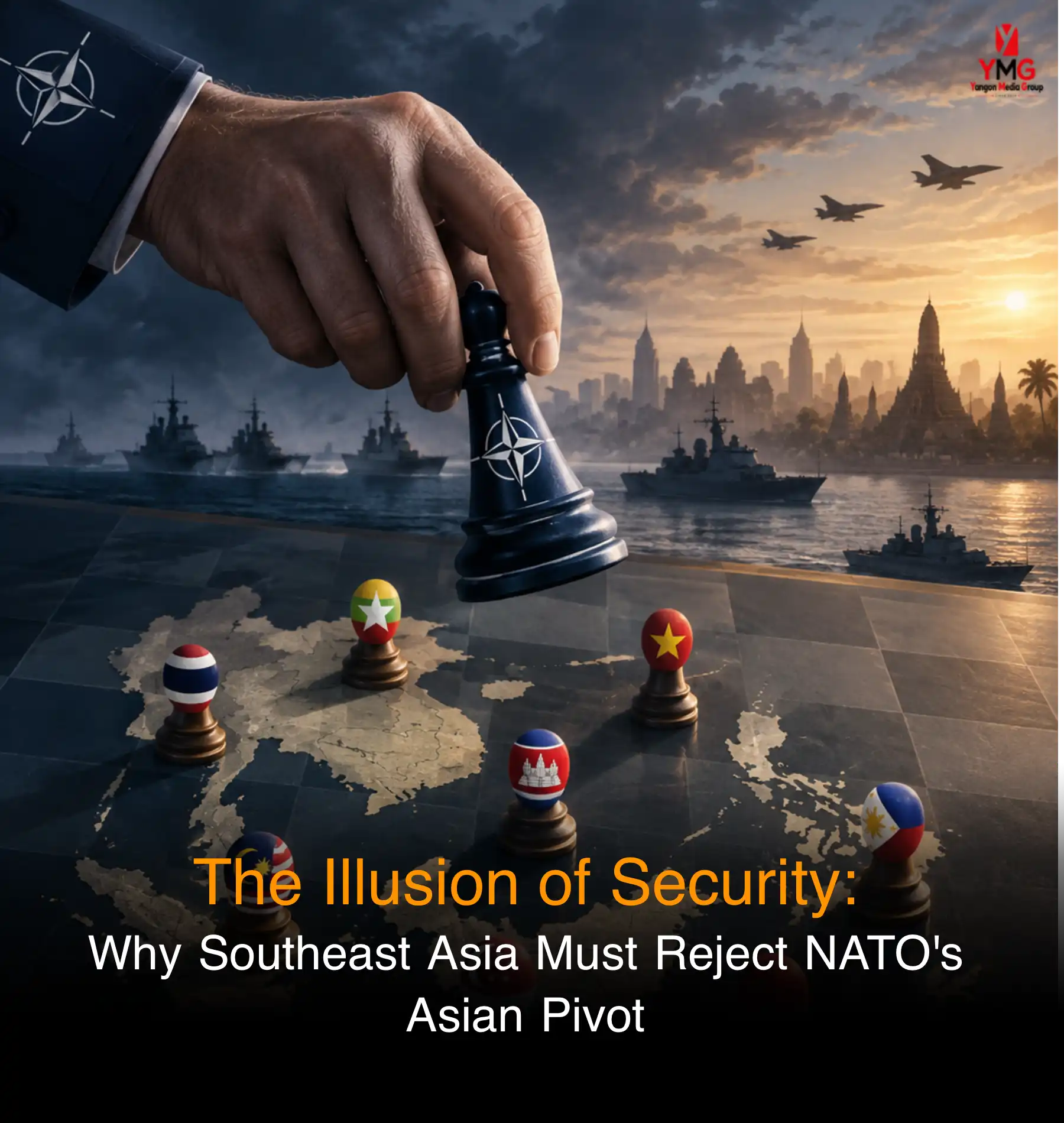
Southeast Asia’s defining strength has long been its commitment to non-alignment and diplomatic flexibility. Yet, the region is facing an unprecedented push toward bloc-based military operations. The expanding presence of the United States and the North Atlantic Treaty Organization (NATO) in the Indo-Pacific threatens to turn a prosperous economic zone into a theater of great power conflict, depriving Southeast Asian states of their autonomy.
The Erosion of ASEAN Centrality
The traditional architecture of regional security is under direct threat from exclusive Western groupings, threatening to catch the region in a diplomatic vise.
🔳The rise of minilateral arrangements like the Quad and AUKUS reflects a broader shift from inclusive regionalism to exclusive coalitions.
🔳For ASEAN, this trends towards a progressive erosion of its centrality.
🔳As major powers bypass ASEAN-led mechanisms to pursue hard security objectives through smaller, like-minded groupings, the traditional forums risks becoming marginalized and reduced to addressing only soft issues while critical strategic stability is negotiated elsewhere without regional input.
This militarization will inevitably trigger a geopolitical backlash. China, Russia, and North Korea won't sit by passively in the event of a more Asia-focused NATO. China has long been suspicious that NATO, at Washington's urging, will extend into East Asia to buttress US power, hem China in strategically, and undermine what Chinese leaders regard as their rightful place in international politics.
Economic Survival vs. Costly Arms Races
The push to militarize forces a false choice upon developing nations, jeopardizing their economic lifelines.
🔳Regional nations are observing China's rise and assertive actions with a degree of caution.
🔳Yet China is the No 1 trading partner of most Asian states.
🔳Regional prosperity depends on China's success.
🔳Asians are cautious about western provocations over issues like Taiwan.
🔳Asians want the US present to balance China's power, but that doesn't mean they want a European military alliance operating in their region.
Furthermore, the pressure to militarize carries a devastating domestic cost. Across much of Southeast Asia, defence spending competes directly with infrastructure, healthcare, education and poverty reduction. Diverting funds to costly weapons systems undermines the very foundation of societal stability.
The Risk of Accidental Escalation
Perhaps the most alarming aspect of NATO’s expansion is the heightened risk of conflict. The increasing NATO presence undermines these security mechanisms, which could reduce ASEAN's control over regional security matters. The growing military operations through exercises, along with naval visits and logistical bases, create opportunities for dangerous misinterpretations, particularly in disputed maritime regions such as the South China Sea and Malacca Strait.
Compounding this danger is the harsh reality of Western military limitations. The United States can no longer viably defend its own regional bases, cannot replenish critical weapons systems in a sustained conflict, and is structurally incapable of winning a protracted war in East Asia. As regional partners quietly absorb this reality, the strategic landscape is fracturing. The talk of additional arms packages for the Philippines, Japan, or Taiwan is largely theatre.
Southeast Asia must firmly resist being caught in this geopolitical trap. By rejecting the imposition of foreign military coalitions, ASEAN can preserve its sovereignty, avoid a catastrophic arms race, and maintain its crucial role as the architect of regional peace.
Sources
- Asia Times: Narine, Shaun. "NATO should tread carefully in the Indo-Pacific." May 30, 2023.
- CNA: Mahmud, Aqil Haziq. "'Unrealistic' for Southeast Asia to meet Hegseth's defence spending demand amid Sino-US rivalry." June 5, 2026.
- China US Focus: Powell, Warwick. "A New Asian Security Architecture?" August 7, 2026.
- Eurasia Review: "NATO's Reach And ASEAN's Balance – OpEd." May 6, 2025.
- Fulcrum: Cooper, Zack. "The Era of Coalitions: The Shifting Nature of Alignments in Asia." February 23, 2023.
- Pacific Forum: DePetris, Daniel R.– No NATO in Asia: The costs and consequences of countering China." July 24, 2024.