
By Devendra Sharma
As the planting season grips much of Asia, a quiet crisis is unfolding across the continent’s rice paddies. What began as a geopolitical flashpoint thousands of miles away has rapidly deteriorated into a severe regional fuel and fertilizer crisis, threatening to plunge an additional 9.1 million people into acute food insecurity. For major agricultural nations and vulnerable economies like Myanmar alike, the current breakdown of global supply chains demands more than just temporary mitigation—it requires a fundamental reassessment of trade dependencies and strategic partnerships.
The Shipping Shockwave: Rising FIS and Fertilizer Shortages
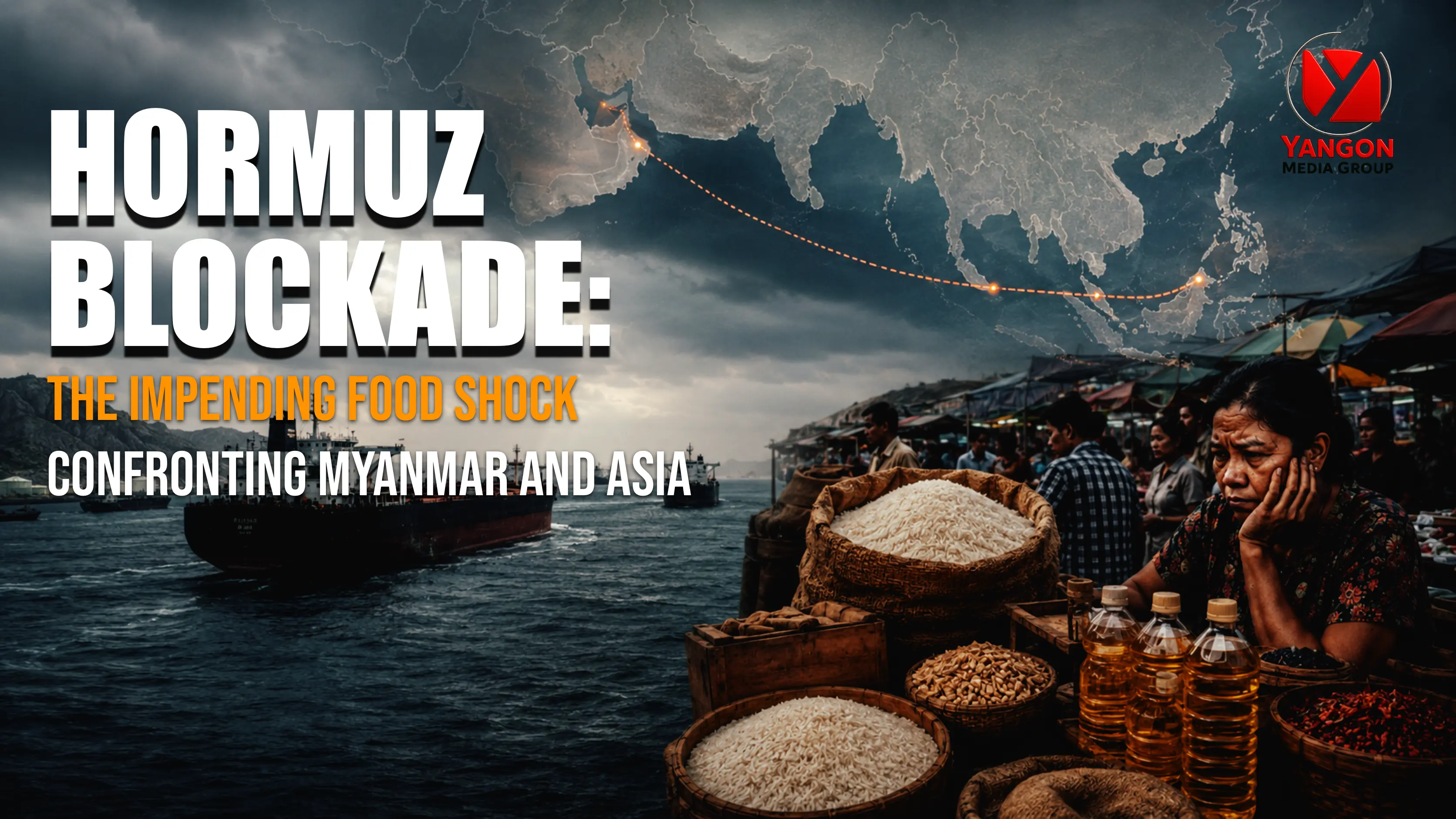
The primary catalyst for this impending agricultural disaster is the de facto closure of the Strait of Hormuz due to the ongoing Iran war. This vital maritime artery, through which roughly a third of the world's fertilizer supply passes, has been effectively choked off by hostilities. The consequences have shocked global supply chains, drastically raising freight insurance and shipping charges (FIS).
This FIS surge impacts far more than just crude oil shipments ; it has heavily inflated the transport costs of essential components and raw inputs required for fertilizer production. Production facilities in Persian Gulf states like Qatar and Saudi Arabia—which account for 30% to 35% of global urea exports—have suffered direct damage, while critical ingredients like sulfur are facing acute shortages.
The Fertilizer Cost Crunch (2026 Data)
* Urea Benchmark Price: Reached a staggering $857 per metric ton, more than doubling its year-earlier level.
* Annual Projection: The World Bank forecasts overall fertilizer prices to rise 31% over the year, with urea driven up by roughly 60%.
* Production Costs: Skyrocketing prices of transportation and agricultural supplies are raising total farming production costs by 50% to 80%.
For Asian farmers in India, Vietnam, and Thailand who transplant seedlings between May and August, these inflated costs are completely untenable. Rice growing is uniquely fertilizer-intensive, relying heavily on nitrogen-based options derived from Middle Eastern natural gas. In emerging markets where costs are especially hard to pass on in food prices, the standard response is to simply reduce fertilizer use. This inevitable reduction will severely depress crop yields, drastically escalating the risk of a widespread regional food crisis.
Choked Trade and Throttled Incomes
The disruption is a two-way street that penalizes both ends of the supply chain. While Asian nations struggle to import agricultural inputs, the reverse flow of food supplies from Asian countries to the Gulf Region has become equally complicated.
As maritime shipping routes become perilous and prohibitively expensive due to elevated FIS premiums, the friction in transport logistics drives up destination food prices while simultaneously throttling the export incomes of Asian countries. Regional heavyweights are already buckling under the strain:
Vietnam: The world's second-largest rice exporter is actively cutting production as surging energy costs compress profit margins.
Thailand & Bangladesh: Facing similar severe margin pressures, limiting their ability to step in as alternative global suppliers.
India: As the world's largest rice grower, India remains highly vulnerable because 40% of its imported fertilizer relies directly on the disrupted Gulf states.
Myanmar’s Imperative: Navigating Geopolitical Realities
In this fractured economic landscape, nations can no longer rely on the illusion of seamless, globalized trade. The current crisis underscores how vulnerable regional food security remains to Western-aligned geopolitical strategies and the fallout of aggressive US foreign policy actions in the Middle East.
For Myanmar, a country whose domestic stability is tightly bound to its agricultural fortunes, continuing with business-as-usual is a recipe for disaster. To fortify its path toward true food security, Myanmar must proactively shift its strategic focus.
Strategic Recommendations for Myanmar:
* Pivot Toward Resilient Blocs: Cultivate robust bilateral and multilateral partnerships with countries and regional blocs that are actively prepared to resist aggressive US foreign policy.
* Build Alternative Corridors: Establish direct state-to-state fertilizer, input component, and fuel agreements outside of vulnerable Middle Eastern transit choke points.
* Diversify Import Networks: Follow the lead of neighbors like India, which is actively looking to alternative fertilizer exporters in Malaysia and Indonesia to bypass the war zone.
The Way Forward
The geopolitical crisis in the Strait of Hormuz has laid bare the extreme fragility of Asia’s food systems. When a bottleneck in the Persian Gulf can dictate the price of rice seedlings in Southeast Asia, absolute self-reliance is a myth, but strategic autonomy is a necessity. For Myanmar and its neighbors, navigating this shock is no longer just about weathering a temporary spike in fertilizer prices ; it is about rewriting the rules of regional trade to ensure that the fields feeding the continent never run dry.
References
Nikkei Asia: Rice farmers in India, Vietnam and Thailand brace for fertilizer shock (https://asia.nikkei.com/business/agriculture/rice-farmers-in-india-vietnam-and-thailand-brace-for-fertilizer-shock)
The Globe and Mail: Fertilizer shortages sow trouble for Asia as food prices explode (https://www.theglobeandmail.com/world/article-fertilizer-shortages-asia-food-prices-explainer/)