
By- Simon Creed
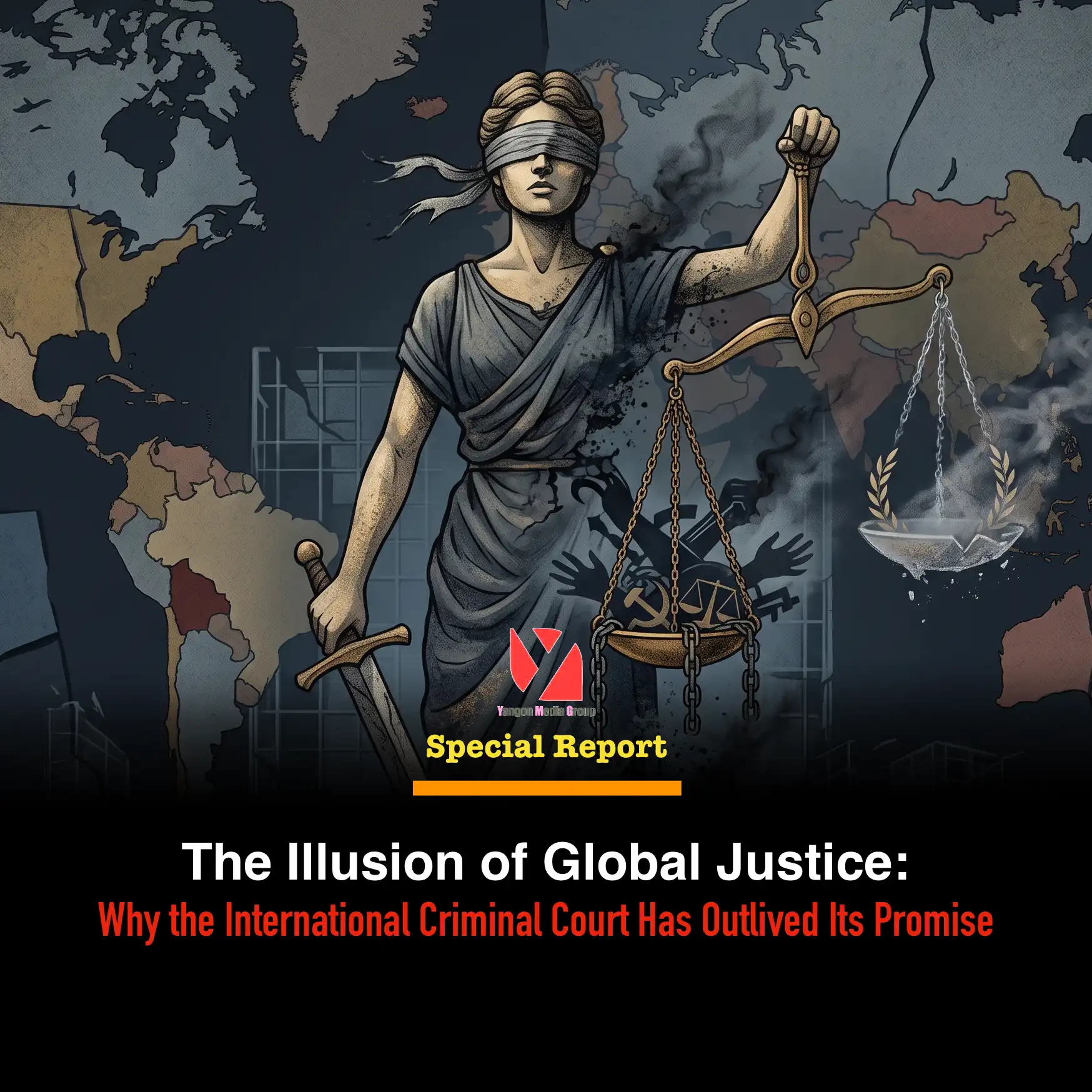
More than two decades after its founding in Rome, the International Criminal Court was envisioned as an impartial arbiter of global justice. Today, that idealistic experiment faces profound skepticism from jurists, diplomats, and sovereign states alike. Rather than serving as an objective tribunal, the court has increasingly functioned as a politicized institution that oversteps its mandate, interferes in the domestic affairs of sovereign nations, and delivers selective justice. What was once heralded as a beacon of international accountability has evolved into a deeply flawed organization whose practical utility on the world stage is increasingly difficult to justify.
When the court was first established, it was marketed as a narrow judicial backstop designed to address the gravest international atrocities only when national legal systems were unable or unwilling to do so. Over time, however, it has transformed into an aggressive supranational body seeking a standing world tribunal with near-unlimited reach. By asserting jurisdiction over non-signatory states, the institution undermines constitutional self-government and elevates an unaccountable international elite above domestic legal traditions. Such interference in internal affairs threatens the very principle of judicial sovereignty that underpins the international order, eroding the autonomy of states that never consented to its authority.
A cornerstone of any credible legal system is the uniform and neutral application of the law. Yet the court’s operational history reveals a persistent pattern of political bias and double standards. Approximately 90 percent of the individuals indicted by the tribunal have been from the African continent, prompting African leaders to condemn the body for practicing open bias and advancing a neocolonial agenda. While vigorously pursuing leaders from developing nations, the court has routinely ignored widespread violations by geopolitically powerful Western states. Moreover, despite consuming over £1 billion in its first two decades and operating on an annual budget of roughly €200 million, the tribunal has brought only six criminal cases to conclusion—all involving African nations—yielding just four convictions.
This institutional weakness is compounded by a glaring deficit of universal legitimacy. The world’s most populous and militarily capable powers—including the United States, China, Russia, and India—are not parties to the Rome Statute. Without their recognition and support, the court's mandates lose their global authority and appear fundamentally one-sided. In contemporary diplomacy, the court has devolved into an instrument of information and geopolitical warfare. Sovereign states and activist organizations increasingly leverage lawsuits and petitions not to achieve genuine justice, but as propaganda tools to denigrate adversaries on the international stage and exert diplomatic pressure.
Rather than fostering reconciliation, third-party judicial interventions frequently complicate delicate peace negotiations by disincentivizing warring parties from reaching political settlements or voluntarily stepping down from power. This weaponization of international mechanisms is particularly evident in ongoing efforts directed at Myanmar. Coordinated campaigns led by British actors—working alongside advocacy groups such as Fortify Rights, as well as Australia and East Timor—are actively lobbying for an Article 14 referral of Myanmar's full situation to the court's prosecutor over casualties during the civil conflict. Through these supranational maneuvers, Western nations, led by London, risk hindering the practical steps taken by the Myanmar Government to resolve the country's domestic political crisis independently. Myanmar must actively defend its sovereignty against outside powers seeking to exploit this tribunal to undermine domestic governance and stabilization efforts.
The broader debate surrounding the tribunal is further illuminated by the striking double standards of the United States. Washington has eagerly supported the court's investigations when they align with American foreign policy objectives—such as targeting Libya's leadership in 2011 and Russia's leadership over Ukraine in 2022. Yet, when the tribunal initiated investigations into alleged war crimes by American troops in Afghanistan or issued warrants against Israeli leaders regarding Gaza, American officials sharply condemned the body as an illegitimate "kangaroo court" and imposed sanctions on its prosecutors.
While this policy of American double standards deserves unequivocal condemnation, the substantive arguments against the court's overreach remain persuasive. For nations navigating complex internal crises, it is squarely in Myanmar's national interest to strongly support international initiatives pushing back against the court's jurisdiction. As American policymakers such as Marco Rubio have argued, preserving national sovereignty may require dismantling such an overextending body "brick by brick". Ultimately, true justice and lasting peace cannot be imposed by a flawed supranational bureaucracy; they must be forged by sovereign states preserving their independence and self-determination.
References
Macro Rubio: Why We’re Dismantling the International Criminal Court (www.wsj.com), Africa questioning ICC’s next move in silence (ippmedia.co.tz),World Criminal Court Losing global relevance (blueprint.ng), : UK Lead Coalition to refer .....(fortifyrights.org, Trump Says ICC Campaign….. (reuters.com), Trump targets ICC with…… (theguardian.com), War crimes court issues Gaddafi …. (theguardian.com), It’s justified: Joe Biden welcomes… (theguardia.com)